Bridging the Technological Divide in Education
4 min read
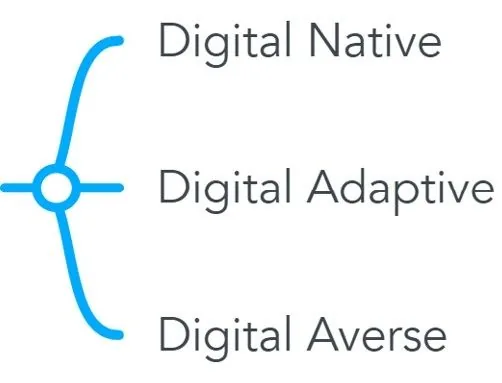
The diagram to the left illustrates the varying degrees to which different generations interact with technology, a spectrum ranging from Digital Averse to Digital Native.
This classification highlights a critical understanding: not all individuals engage with technology in the same way, and these differences have profound implications for education, especially in higher education.
Understanding the Spectrum
- Digital Averse individuals are those who did not grow up with technology and often view it with suspicion or reluctance. For them, technology is an unfamiliar landscape that they navigate cautiously, if at all.
- Digitally Adaptive individuals also did not grow up with the advanced technology we see today or experienced very primitive forms of it. However, they have shown a willingness to adapt and embrace new technological tools, though this process may require significant effort.
- Digital Natives are those who have grown up in a world where technology is as ubiquitous as the air they breathe. For these individuals, technology is not an add-on; it’s an intrinsic part of their daily lives. They cannot imagine a world without it.
The Challenge for Educators
Many educators today fall into the Digital-Averse or Digitally Adaptive categories. Even those who consider themselves Digital Natives may find that the technology they grew up with is outdated and primitive compared to the current advancements in artificial intelligence, virtual reality, and digital communication platforms.
As technology continues to advance at an unprecedented rate, its pervasive nature has transformed it into a language, culture, and experience all its own. Each generation relates to the technology of its time in ways that are so deeply ingrained that they often go unnoticed, much like a fish is unaware of the water in which it swims.
This presents a unique challenge for educators. We are, in essence, immigrants to our students' technological world. They are the natives, fully immersed in a digital landscape that we are still trying to understand. This generational gap in technological fluency requires educators to adapt their teaching methods to meet students where they are rather than expecting students to conform to outdated models of learning and assessment.
The Pervasiveness of Technology
Technology is not just a tool but a cultural force that shapes how individuals think, communicate, and learn. It’s a language that today’s students speak fluently, and it’s a landscape they navigate effortlessly. In contrast, many educators are like SCUBA divers exploring the ocean—immersed in a beautiful and fascinating world that is also foreign and challenging to navigate without proper training and tools.
Ignoring the impact of technology in education is not an option. Technologies like artificial intelligence (AI), augmented reality (AR), and virtual reality (VR) are not passing trends; they are reshaping the world and, by extension, the way we educate. To remain relevant and effective, educators must integrate these technologies into their teaching strategies and assessment criteria.
Adapting Education to Technological Culture
To effectively educate today’s students, we must adapt our approaches to align with the technological culture that they understand. Here are a few key strategies:
- Process-Focused Assessment: Traditional education often emphasizes the final product—a paper, a test score, a project. However, in a world where information is readily accessible and tools can automate many tasks, the focus should shift to the process. How do students approach problem-solving? How do they use technology to gather, analyze, and synthesize information? By assessing the process, we encourage deeper learning and critical thinking.
- Multi-Modal Presentation Styles: Today’s students are immersed in rich, multimedia environments. They engage with content that is visual, auditory, and interactive. Educators need to incorporate multi-modal presentation styles that reflect this reality. This might include using videos, interactive simulations, podcasts, and 3D virtual environments to present information in ways that resonate with students.
- Integration of AI and Emerging Technologies: Rather than shying away from AI and other emerging technologies, educators should explore how these tools can enhance learning. AI can offer personalized learning experiences, provide instant feedback, and help students develop skills that are increasingly valuable in the workforce.
- Cultural Competence in Technology: Just as educators strive to be culturally competent in understanding the diverse backgrounds of their students, they must also develop technological competence. This involves not only understanding how to use technology but also recognizing how technology shapes the experiences and worldviews of their students.
Becoming Technological Immigrants with Purpose
As educators in higher education, we are immigrants to the digital world our students inhabit. But this doesn’t have to be a disadvantage. By acknowledging the technological divide and taking deliberate steps to bridge it, we can become more effective educators. We can guide our students through their educational journeys, equipping them with the skills and knowledge they need to thrive in a world where technology is omnipresent.
The future of education lies in our ability to adapt to and embrace the technological culture that defines the lives of our students. It’s time to move beyond our comfort zones, to learn the language of technology, and to use it to create educational experiences that are as dynamic and innovative as the world in which our students live.
Originally published on C.O.R.E Framework.