
SBAR is CORE
3 min read
Why PT Students Should Learn SBAR: Speaking the Language of Healthcare
What is SBAR?
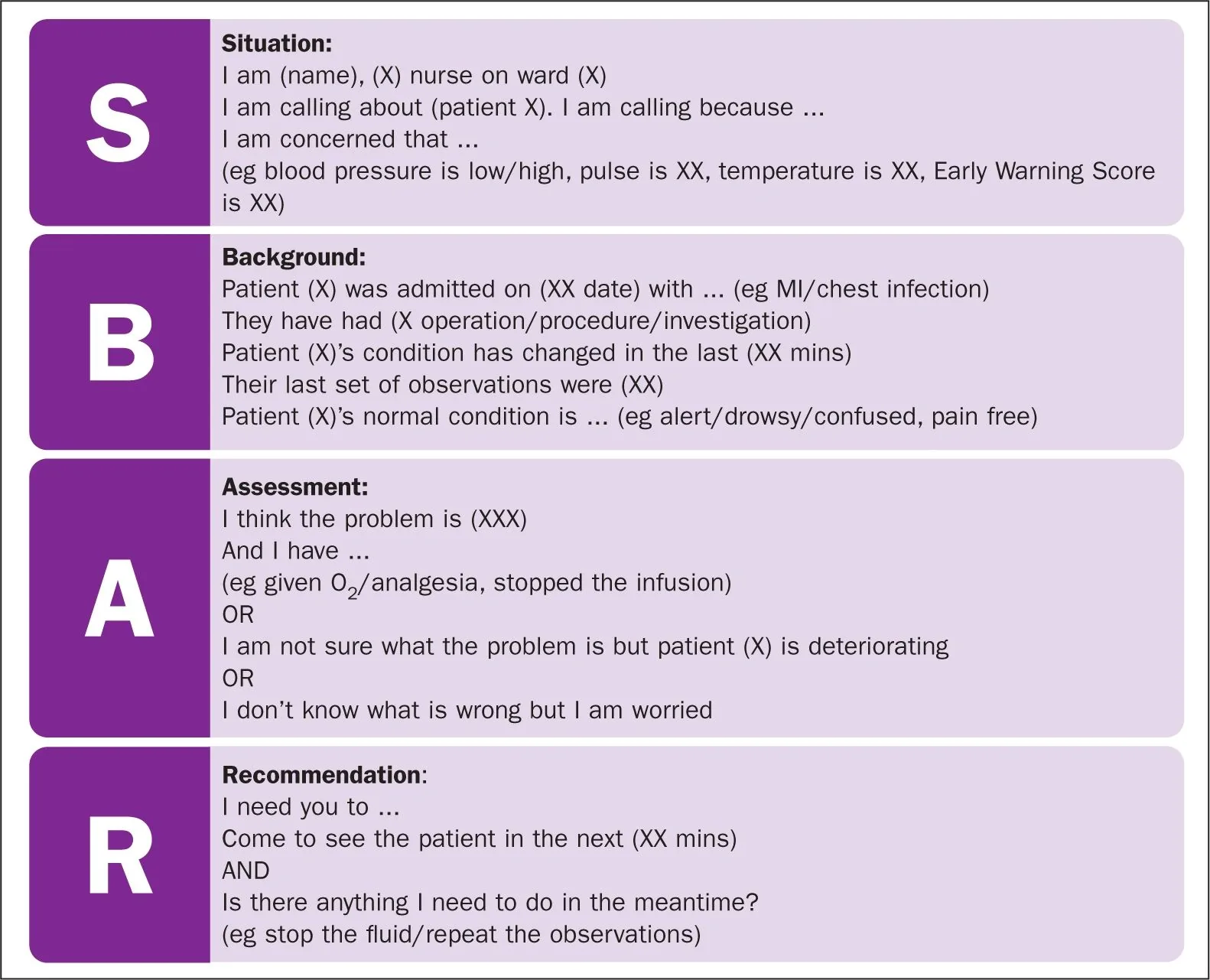
SBAR is a communication framework widely used in healthcare to structure conversations and ensure that critical information is delivered clearly and consistently. It stands for:
S – Situation: What’s happening right now?
B – Background: What’s the context or relevant history?
A – Assessment: What do you think the problem is?
R – Recommendation: What do you suggest should be done?
Originally adapted from the U.S. Navy’s nuclear submarine program, SBAR was introduced into healthcare as a way to reduce errors, improve patient safety, and promote efficient teamwork. Major organizations—including the Joint Commission, the Agency for Healthcare Research and Quality (AHRQ), and the World Health Organization (WHO), endorse it as a gold standard for structured handoffs and critical communication (Achrekar et al., 2018).
Why SBAR Matters for Physical Therapy Students
At first glance, SBAR might seem like a tool just for physicians or nurses. But research shows it has unique value for physical therapy (PT) students as well:
- Improves Interprofessional Communication
A training program at Emory University used SBAR to guide communication among interprofessional student teams, including PT students. Assessments with the SBAR-LA rubric showed measurable improvement in communication skills (McCall et al., 2023). - Builds Handoff Skills in PT Education
The Journal of Acute Care Physical Therapy published a study on creating an interprofessional handoff assessment tool for Doctor of Physical Therapy (DPT) students. The tool was explicitly informed by SBAR principles, helping PT students practice structured, professional patient updates (Ellis et al., 2022). - Boosts Confidence and Clinical Reasoning
In a simulation study involving PT and nurse practitioner students, DPT learners reported significant gains in communication confidence when using SBAR. The framework improved their ability to separate facts, analysis, and recommendations, sharpening both teamwork and reasoning (Caron et al., 2019). - Reflects Real-World Practice
Rehabilitation professionals who adopted SBAR in clinical settings found that it encouraged reflection, collaboration, and more consistent dialogue among colleagues. For PT students, learning SBAR means stepping directly into a communication culture already valued in practice (Helleman et al., 2022).
How SBAR Helps PT Students Succeed
Clarity: PTs often need to communicate urgent concerns, such as a patient’s sudden decline in mobility or new pain. SBAR ensures those updates are sharp and structured.
Professional Credibility: Delivering information in the SBAR format signals to physicians and nurses that PTs are prepared, precise, and aligned with healthcare communication norms.
Reduced Stress: For students, SBAR serves as a script that prevents freezing up or rambling under pressure.
Interprofessional Alignment: Using SBAR bridges PT with the larger medical team, ensuring all voices are heard in patient care.
Final Thoughts
Learning SBAR is more than checking a box in communication training; it’s learning the professional language of healthcare teams. For PT students, it provides confidence, credibility, and alignment with interprofessional colleagues. Most importantly, it ensures that patients receive safe, coordinated, and effective care.
By mastering SBAR now, PT students prepare themselves not only to contribute but to lead in the conversations that matter most.
References
Achrekar, M. S., Murthy, V., Kanan, S., Shetty, R., Nair, M., & Khattry, N. (2018). Situation, Background, Assessment, Recommendation (SBAR) communication tool for handoff in health care – A narrative review. Safety in Health, 4(7). https://doi.org/10.1186/s40886-018-0073-1 (opens in a new tab)
Caron, E., Houghton, J., Sharma, R., Tandon, R., & Johnston, C. (2019). Improving interprofessional communication confidence among physical therapy and nurse practitioner students through SBAR simulation. Journal of Interprofessional Education & Practice, 15, 1–6. https://doi.org/10.1016/j.xjep.2019.03.002 (opens in a new tab)
Ellis, D., Reilly, K., Riddle, D., & Jennings, H. (2022). Development of an interprofessional handoff assessment for Doctor of Physical Therapy students. Journal of Acute Care Physical Therapy, 13(2), 65–73. https://doi.org/10.1097/JAT.0000000000000172 (opens in a new tab)
Helleman, R., Loos, E., & Staal, J. B. (2022). Proposed introduction of the SBAR method in rehabilitation: Experiences of physiotherapists. Juniper Online Journal of Surgery, 15(1), 1–6. https://juniperpublishers.com/jojs/pdf/JOJS.MS.ID.555599.pdf (opens in a new tab)
McCall, B., Trice, A., Brubaker, S., Knight, S., & Ryan, J. (2023). Assessment of a training program for interprofessional communication using SBAR among health professional students. Journal of Interprofessional Care, 37(2), 222–229. https://doi.org/10.1080/13561820.2022.2078197 (opens in a new tab)
Originally published on C.O.R.E Framework.