CIA's Simple Sabotage Field Manual - A Cautionary Tale
4 min read
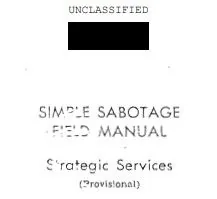
In 1944, the Office of Strategic Services (OSS)—the precursor to the CIA—published a covert document now known as the Simple Sabotage Field Manual. The manual's purpose was to empower ordinary citizens in occupied territories to subtly sabotage the efforts of enemy forces during World War II. The guidance offered in the manual was simple: disrupt operations through small, everyday acts that would collectively weaken the enemy’s efficiency (Office of Strategic Services, 1944). Although the manual was meant for wartime subversion, many of its principles unintentionally appear in the behavior of modern dysfunctional organizations. Let's explore the uncanny resemblance between organizational inefficiency and the sabotage tactics described in the Simple Sabotage Field Manual and how these behaviors can undermine faculty and students in educational settings.
Origins of the Simple Sabotage Field Manual
The Simple Sabotage Field Manual was born out of a need to disrupt enemy operations without requiring sophisticated tools or extensive training. It encouraged ordinary citizens to engage in low-risk acts that could bog down the enemy's war effort, such as misfiling documents, causing delays in transportation, or fostering general confusion (Office of Strategic Services, 1944). The core idea was to exploit the natural inefficiencies already present in any system, using subtle acts that could be passed off as honest mistakes.
How Dysfunctional Organizations Follow the Manual
Though unintentional, many modern organizations mirror the behaviors recommended in the manual, fostering a culture of inefficiency. These behaviors include:
- Bureaucratic Bloat: The manual recommends that saboteurs "insist on doing everything through channels" and to "refer all matters to committees for further study" (Office of Strategic Services, 1944, p. 28). Dysfunctional organizations often encourage excessive bureaucracy, with layers of approval processes that slow decision-making and dilute accountability.
- Poor Communication: Another tactic in the manual is to "misfile essential documents" and to create "lengthy and incomprehensible explanations" when asked for clarification (Office of Strategic Services, 1944, p. 30). In the workplace, these behaviors manifest as poor communication practices that confuse team members, delay projects, and foster frustration.
- Decision Paralysis: The manual advises saboteurs to "re-open the question of the advisability of any decision" at every opportunity, thereby preventing progress (Office of Strategic Services, 1944, p. 29). In dysfunctional organizations, decision-making is often stalled by endless debate over minor issues, preventing innovation and timely action.
The Impact on Faculty and Students
In educational institutions, these sabotage-like behaviors can have significant negative effects on both faculty and students. Faculty members may find themselves bogged down in bureaucratic red tape, unable to access the resources or support they need to innovate in their teaching. Endless committee meetings and convoluted approval processes sap time and energy, diverting focus away from curriculum development and student engagement.
For students, these behaviors can create an environment of inconsistency and confusion. Delays in feedback, unclear instructions, and shifting academic policies can erode student trust and engagement. As students encounter more barriers to their learning, their motivation decreases, and their academic performance may suffer.
Moreover, when faculty are forced to focus on bureaucratic tasks rather than teaching and mentoring, their ability to build meaningful relationships with students is diminished. According to the Simple Sabotage Field Manual, fostering confusion and inefficiency is a powerful way to undermine an enemy’s effectiveness. In dysfunctional educational settings, this breaks trust and collaboration between students and educators, ultimately sabotaging the learning experience.
Breaking the Cycle
Recognizing these sabotage-like behaviors in your institution is the first step toward breaking the cycle of inefficiency. The CORE framework advocates for a streamlined, student-focused approach to education that fosters collaboration and innovation. By eliminating unnecessary bureaucratic processes and promoting clear communication, educational leaders can prevent the unintentional sabotage of their institutions.
Building a culture of trust and efficiency allows both faculty and students to focus on what matters most: education and personal growth. Faculty can direct their energy toward developing innovative teaching methods and mentoring students, while students can engage more fully in their learning, free from the distractions of bureaucratic confusion.
Conclusion
The parallels between the tactics outlined in the Simple Sabotage Field Manual and the behaviors of dysfunctional organizations are striking. Whether intentional or not, these behaviors can sabotage both faculty and students in educational settings. By streamlining decision-making processes, fostering clear communication, and focusing on the core mission of education, institutions can avoid falling into the trap of unintentional sabotage. Through the implementation of the CORE framework, educators and administrators can create an environment where innovation and collaboration thrive, ultimately enhancing the higher education experience for all.
References
Office of Strategic Services. (1944). Simple sabotage field manual [Declassified document]. U.S. Central Intelligence Agency. Retrieved from https://www.cia.gov/library/readingroom/docs/SIMPLE%20SABOTAGE%20FIELD%20MANUAL%20%28U%29%201945.pdf (opens in a new tab)
Originally published on C.O.R.E Framework.