Dyslexia: A Hidden Superpower?
17 min read
Being called stupid sucks. Believing it is devastating.
I struggled in school. I had a really difficult time reading. Learning my times tables was so impossible, I just never learned them. I was that kid that the teachers could not figure out. I seemed smart. I had a very advanced vocabulary, but I could not spell worth a damn.
They told me I was stupid, but I figured something out. I could outthink them.
I didn't need to read the book; I just needed to skim it and have a conversation with a kid I knew who had read it. I didn't need my times tables because I grasped math so well that I solved simple problems by walking through advanced abstractions in my mind. I had them all fooled. I had them convinced I wasn't that stupid, but, most importantly, I did not let their label of me define me. I thought I knew better, and, as it turns out, I was right.
I am dyslexic.
(Click Here To Continue by Listening) (opens in a new tab)
And my story isn't unique. It's the story of roughly 20% of students sitting in classrooms right now. Students who struggle with reading but can mentally rotate three-dimensional objects with ease. Students who can't spell but can see patterns across disciplines that their teachers miss. Students who fail rote memorization tests but can predict how complex systems will behave with uncanny accuracy.
For years, I thought I was just good at faking it, at compensating, at working around my deficits. Then I learned the neuroscience. And everything clicked into place. I wasn't compensating for broken parts of my brain. I was using parts of my brain that were actually enhanced, strengthened, optimized for different kinds of thinking.
The same neural wiring that made reading hard made other things easy. Not just easier. Superior.
Let me explain what I've learned about how dyslexic brains actually work, why this matters for every student with dyslexia sitting in your classroom right now, and how understanding this can transform not just their academic experience but their entire relationship with their own potential.
The Beliefs That Shape Our Brains
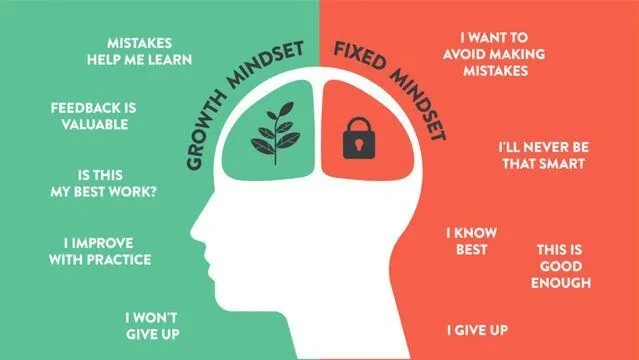
Before we dive into the neuroscience, we need to talk about Carol Dweck's groundbreaking research on mindset. Because here's what her work at Stanford revealed: what students believe about their ability to learn literally changes how their brains respond to challenges.
In her studies, Dweck found that students with a growth mindset (those who believe intelligence can be developed) show different patterns of brain activity when facing difficult problems compared to students with a fixed mindset (those who believe intelligence is static). Growth mindset students show increased neural activity in areas associated with deep processing and learning. Their brains are literally more engaged with the struggle.
But here's what Dweck's work reveals that's even more profound: when students believe their difficulties reflect permanent limitations rather than temporary challenges, they disengage. They stop trying. Not because they're lazy or unmotivated, but because their belief system tells them effort is pointless.
Now think about students with dyslexia. For generations, we've defined dyslexia purely by what these students struggle with: reading, spelling, processing written symbols. We've measured them against a narrow set of skills and found them wanting. We've inadvertently installed a fixed mindset about their cognitive abilities.
I was lucky. I refused to believe the label. But how many students aren't that stubborn? How many accept the verdict that they're "just not smart" and never discover what their brains are actually optimized for?
What if we've had it backwards this entire time?
Rewriting the Dyslexia Narrative
Drs. Brock and Fernette Eide, both neurologists and learning specialists, asked a different question in their paradigm-shifting book The Dyslexic Advantage: Unlocking the Hidden Potential of the Dyslexic Brain (opens in a new tab). Instead of focusing solely on deficits, they asked: What do dyslexic brains do exceptionally well?
The answer they discovered through years of research, brain imaging studies, and interviews with successful dyslexic individuals is remarkable. The same neurological differences that make decoding written language challenging also create powerful cognitive advantages in other domains.
This isn't compensation. It isn't "despite their dyslexia." The advantages emerge because of the dyslexic brain structure, not in spite of it.
When I skimmed a book and then had a conversation to extract the key concepts, I wasn't cheating. I was using my brain's natural strength for narrative reasoning and interconnected thinking. When I solved math problems by "walking through advanced abstractions" instead of memorizing times tables, I wasn't taking a shortcut. I was using my brain's enhanced ability for dynamic reasoning and pattern recognition.
My brain wasn't broken. It was different. And that difference came with trade-offs.
The Science of the Dyslexic Advantage
Here's what the neuroscience reveals: dyslexic brains are wired differently at a fundamental level. Brain imaging studies show that dyslexic individuals have different patterns of neural connectivity. Specifically, they have greater distances between certain neuron clusters and different patterns of information flow between brain regions.
This different wiring creates trade-offs. The same neural architecture that makes rapid, automatic processing of fine details (like distinguishing between 'b' and 'd') more difficult simultaneously enhances the brain's ability to see connections across broader conceptual distances.
Think of it this way: most brains are optimized for high-speed local processing. Dyslexic brains are optimized for long-distance pattern recognition. They sacrifice some efficiency in processing individual trees to gain an exceptional ability to see the forest, recognize patterns across the forest, and even predict how the forest will change over time.
Dr. Manuel Casanova, a leading neuroscientist, describes this as a difference in "minicolumns" (vertical arrangements of neurons in the brain). Dyslexic brains tend to have more space between these minicolumns, which affects how information gets processed. While this spacing makes certain automatic, rapid-fire tasks more difficult, it enhances the brain's ability to make distant connections between disparate information.
The University of Pennsylvania conducted fascinating research on how dyslexic and non-dyslexic individuals search for information on Wikipedia. Dyslexic participants showed significantly more far-field thinking, made wider associations between concepts, and demonstrated superior metaphorical reasoning. Their search patterns revealed minds that naturally see connections others miss.
This isn't a consolation prize. It's a fundamentally different and valuable way of processing the world.
The MIND Superpowers
The Eides identified four specific areas where dyslexic brains consistently show superior abilities. They use the acronym MIND to describe these superpowers: Material reasoning, Interconnected reasoning, Narrative reasoning, and Dynamic reasoning.
Let's break down what each of these actually means and why they matter.
Material Reasoning: Seeing in Three Dimensions
Material reasoning is the ability to understand and manipulate three-dimensional space with exceptional clarity. While most people can learn to read blueprints with training, individuals with strong M-strengths can look at a flat blueprint and instantly walk through the completed building in their minds. They see it, rotate it, test it, and identify problems before a single brick is laid.
The Science: Brain imaging reveals that dyslexic individuals often show enhanced activity in regions associated with spatial processing, particularly in the right hemisphere. They're essentially running sophisticated 3D modeling software in their heads.
Real World Impact: Think about what this means for fields like architecture, surgery, engineering, or mechanics. Richard Rogers, the architect who designed the Pompidou Center in Paris and won the Pritzker Prize (architecture's highest honor), is dyslexic. His ability to visualize complex spatial relationships in three dimensions isn't despite his dyslexia; it's intrinsically connected to how his brain processes information.
Case Study: Consider a recent winner of Lego Masters, a dyslexic builder whose creations featured incredible three-dimensional elements and integrated narrative concepts that judges found extraordinary. His builds weren't just structurally impressive; they told stories through spatial relationships in ways that non-dyslexic builders struggled to achieve.
Einstein, perhaps the most famous dyslexic scientist, credited his breakthrough insights in physics to his ability to think in visual and spatial terms. He didn't arrive at relativity through equations first. He imagined riding on a beam of light, visualized warped spacetime, and only then translated these spatial insights into mathematics.
How to Harness It: If you're teaching students with strong M-strengths, give them opportunities to work with physical models, 3D design software, or spatial puzzles. Let them draw, build, and manipulate objects. When teaching abstract concepts, connect them to spatial metaphors. "Multiplication is like building a grid" works better than pure symbolic manipulation.
Interconnected Reasoning: The Pattern Detectives
Interconnected reasoning is the ability to see relationships, patterns, and connections between seemingly unrelated concepts. It's systems thinking on steroids.
This is the strength I used when I had conversations with kids who read the book. I wasn't just extracting plot points. My brain was connecting what they said to other things I knew, building a web of understanding that was richer than what the book alone provided. I was doing what dyslexic brains do best: seeing the big picture by connecting distant dots.
The Science: Dyslexic brains show enhanced connectivity across distant brain regions. While this can slow down processing of sequential information (like reading left to right), it creates superhighways for connecting disparate ideas. The same neural architecture that makes linear processing harder makes web-like, associative thinking easier.
Real World Impact: This strength is invaluable in fields requiring systems thinking: endocrinology (understanding how hormones interact in complex feedback loops), engineering (seeing how components interact in larger systems), environmental science (grasping ecological interconnections), or business innovation (connecting market trends across industries).
Many of the leading scientists working on climate change and complex environmental systems are dyslexic. Why? Because understanding climate requires holding dozens of interconnected variables in mind simultaneously while seeing how changes in one area ripple through the entire system.
Case Study: Consider the dyslexic endocrinologist who excels precisely because endocrinology is all about interconnected feedback loops, metabolic cycles, and system dynamics. While memorizing individual hormone names might be challenging, grasping how the entire endocrine system works as an integrated whole comes naturally. They see the dance of the system where others see individual steps.
Or look at successful dyslexic entrepreneurs (who make up roughly 40% of entrepreneurs despite dyslexics being only 20% of the population). They excel at spotting connections others miss: the unemployed person who owns a car connected with the person who needs a ride and has a smartphone equals Uber. That's interconnected reasoning in action.
How to Harness It: Present information as interconnected systems rather than isolated facts. Use concept maps, flow charts, and diagrams showing relationships. Ask questions like "How does this connect to what we learned last week?" or "What other fields might benefit from this idea?" Give students problems that require synthesizing information from multiple domains.
Narrative Reasoning: The Power of Episodic Memory
Narrative reasoning grows from an enhanced ability to store and retrieve information as stories, episodes, and experiences rather than as abstract, decontextualized facts.
This explains why I could have a rich vocabulary but couldn't spell. I learned words through context, through stories, through experiences where I heard them used. Each word came with a full narrative context. But spelling requires abstract, decontextualized memory of letter sequences. My brain wasn't optimized for that.
The Science: Dyslexic individuals often show enhanced episodic memory (memory for experiences and events) while having weaker semantic memory (memory for abstract facts without context). This isn't a bug; it's a feature. Episodic memory is richer, more flexible, and more creative than rote memory. It stores information with full sensory detail, emotional context, and causal relationships intact.
When someone with strong N-strengths recalls information, they're not pulling up a definition. They're restaging a mental scene, complete with sights, sounds, feelings, and narrative flow. This makes their memories more vivid, more detailed, and more useful for creative applications.
Real World Impact: This strength is powerful for novelists, lawyers (who think in case-based reasoning), psychiatrists (who understand patients through narrative), and anyone who needs to understand human motivation or predict behavior based on past patterns.
Case Study: Anne Rice, author of Interview with the Vampire and dozens of other bestselling novels, struggled with reading throughout elementary school. But from fifth grade on, she wrote adventure stories and plays for her classmates, who responded enthusiastically and overlooked her spelling errors. Her difficulty with abstract semantic processing coexisted with exceptional narrative reasoning. She thought in stories, remembered in stories, and created stories that captivated millions.
Philip Schultz, a Pulitzer Prize-winning poet, discovered his dyslexia as an adult. Looking back, he realized his poetry's power came from his intensely episodic way of processing experience. He doesn't remember facts about his childhood; he re-experiences moments with such vivid sensory detail that readers feel transported into his memories.
How to Harness It: Present information as stories and case studies rather than abstract principles. Ask students to create narratives that illustrate concepts. Instead of "Define photosynthesis," try "Tell me the story of a carbon dioxide molecule's journey through a plant." Use historical narratives, patient cases, or real-world scenarios to teach principles. Let students demonstrate understanding through storytelling rather than only through traditional testing.
Dynamic Reasoning: Predicting the Future
Dynamic reasoning is the ability to use fragments of past experience to make accurate predictions about how situations will unfold over time. It's pattern recognition meets time-based simulation.
This is what let me solve math problems without memorizing times tables. I could see the patterns, understand the relationships, and predict what would happen when numbers interacted. I was running mental simulations, testing hypotheses in my head. The rote memorization approach that worked for other kids was actually slower and less powerful than my pattern-based prediction method.
The Science: Dyslexic individuals with strong D-strengths excel at what neuroscientists call "mental simulation." They can take incomplete information, draw on rich episodic memories, and run mental models of how situations might develop. This involves integrating the brain's narrative reasoning capabilities with pattern detection to project forward (or backward) in time.
Research shows that dyslexic individuals often outperform their peers at tasks requiring prediction with incomplete information. They're better at spotting outliers that others average out and at detecting subtle patterns that signal impending changes.
Real World Impact: This is invaluable for entrepreneurs (predicting market shifts), scientists (forming hypotheses), economists (forecasting trends), paleontologists (reconstructing past events from fragmentary evidence), and anyone working with complex, changing systems.
Case Study: Gerry Wittenberg, CEO of Party City, describes his dyslexic thinking: "I spend most of my time in business thinking, 'What's next?' I see it. I see it in my mind and I start working towards it." That ability to mentally simulate future scenarios and identify which paths lead where gives dyslexic business leaders a significant advantage.
Robert Ballard, the deep-sea explorer who discovered the Titanic, credits his dyslexic thinking with his success. His ability to visualize three-dimensional underwater terrain from sonar data (M-strength) combined with his ability to predict where ocean currents and ship dynamics would have taken a sinking vessel (D-strength) led him to search in a location others had dismissed.
How to Harness It: Give students opportunities to make predictions based on incomplete information. Ask "What do you think will happen next and why?" Present scenarios and have students mentally simulate outcomes. Value insightful predictions even when they can't fully articulate the logical chain that led there. Recognize that some students think by simulation rather than by linear analysis.
The Trade-Offs Are Real (And That's Okay)
Here's what we need to be honest about: these advantages come with real trade-offs. The neural wiring that creates these superpowers also creates genuine challenges with tasks requiring rapid, automatic processing of sequential symbols.
Reading is hard. Spelling is hard. Rote memorization is hard. Processing speed for certain tasks is slower. These aren't excuses; they're neurological realities.
I know this personally. Even now, even understanding all of this, I still struggle with certain tasks. But understanding the trade-off changes everything. I'm not stupid with some compensating strengths. I have a brain optimized for certain kinds of thinking that comes with predictable challenges in other areas.
Here's the critical insight: these challenges don't reflect the absence of intelligence. They reflect a different allocation of cognitive resources. The dyslexic brain is spending less neural real estate on rapid symbolic processing because it's investing more in long-distance pattern recognition, spatial reasoning, and episodic memory.
Think of it like a video game character with different stats. The dyslexic brain didn't put all its points into reading speed; it distributed them toward spatial reasoning, pattern recognition, narrative thinking, and predictive simulation. In the right context, those stats are far more valuable.
Changing the Conversation (and the Outcome)
Here's where Carol Dweck's work becomes crucial again. When students with dyslexia understand that their struggles with reading reflect a trade-off for genuine cognitive advantages rather than general intellectual deficiency, everything changes.
The Eides conducted research with over 2,000 adults using detailed self-assessment surveys on the four MIND strengths. The differences between dyslexic and non-dyslexic individuals were dramatic and statistically significant. Dyslexic individuals consistently rated themselves higher in these areas, and external validation confirmed these self-assessments.
But here's what matters most: when dyslexic students understand their cognitive profile, when they can identify their MIND strengths and learn strategies to leverage them, their entire relationship with learning transforms.
I refused to believe I was stupid, but I didn't have this framework. I didn't have language for what my brain was good at. I just knew I could out-think them, but I couldn't articulate how or why. Imagine if I'd had this knowledge at age ten. Imagine if every struggling dyslexic student had this framework.
This isn't about lowering standards or making excuses. It's about accurate diagnosis. We wouldn't tell a colorblind person they're bad at seeing; we'd acknowledge they process visual information differently and find ways to work with their perceptual reality. Dyslexia deserves the same clear-eyed recognition.
Practical Applications for Educators
So what do we do with this knowledge? How do we honor the CORE framework values while supporting dyslexic learners?
Be Concise in the Right Ways: Dyslexic students benefit from concise text (respect their reading challenges), but they often excel with rich, detailed verbal explanations and visual demonstrations. Conciseness isn't always about fewer words; sometimes it's about choosing the right medium.
Organize for Their Cognitive Style: Linear organization works well for sequential processors. Dyslexic students often benefit from web-like, interconnected organization. Use concept maps. Show relationships. Create multiple entry points into material. Remember that interleaving (which can feel chaotic) often serves dyslexic learners particularly well because their brains are already primed for making connections across domains.
Make It Relevant Through Connection: Connect abstract concepts to spatial reasoning, real-world systems, narratives, or predictive scenarios. Instead of teaching math as abstract manipulation of symbols, frame it as spatial relationships, pattern recognition, or tools for predicting outcomes.
Engage Their Superpowers: Create opportunities for students to demonstrate understanding through their MIND strengths. Let the M-strength student build a model. Let the I-strength student create a systems diagram. Let the N-strength student write a narrative. Let the D-strength student make predictions and test them.
Use Technology Strategically: Text-to-speech, audiobooks, and voice-to-text aren't crutches; they're tools that allow dyslexic students to access content without being bottlenecked by reading speed. Once the content is accessible, their superior reasoning abilities can shine.
Celebrate the Advantages: When a student sees connections others miss, call it out. When they make insightful predictions, acknowledge it. When they think spatially in ways that solve problems, celebrate it. Help them recognize their MIND strengths in action.
The Bigger Picture
Twenty percent of the population has dyslexia. That's not a random accident of genetics. There's an evolutionary reason why this neurological profile persists at such high levels. Human societies need both kinds of thinkers: those optimized for rapid, accurate processing of sequential information and those optimized for seeing patterns, making connections, thinking spatially, and predicting change.
We need the careful accountant and the visionary architect. We need the detail-oriented editor and the systems-thinking scientist. We need both, and we need them working together.
The tragedy isn't that dyslexic students struggle with reading. The tragedy is when we let those struggles define our understanding of their potential. When we measure them solely by their weaknesses and never create opportunities for their strengths to emerge.
When we change that narrative, when we help dyslexic students understand their cognitive profile accurately, something remarkable happens. They develop what the Eides call "dyslexic resilience." They learn to work around their challenges while leaning into their advantages. They develop growth mindsets not despite their dyslexia but because they understand what their particular brain is actually optimized for.
Your Role in This Transformation
If you're teaching students with dyslexia, you have a choice. You can focus exclusively on remediation (trying to make their brains process more like non-dyslexic brains), or you can take a both-and approach: support them in developing coping strategies for reading while simultaneously identifying and cultivating their MIND strengths.
The students who thrive aren't necessarily those whose dyslexia is "mildest." They're the ones who understand their cognitive profile, develop strategies for their challenges, and actively leverage their advantages.
Your job isn't to fix them. Your job is to help them understand themselves, develop tools for navigating a world designed for different cognitive styles, and create opportunities for their unique strengths to shine.
Because here's the truth: that student struggling to decode words on a page might be simultaneously running mental simulations of future scenarios, detecting patterns across disciplines, visualizing complex three-dimensional structures, or constructing rich narrative frameworks that most people can't access.
I was that student. I'm now a successful educator, teaching thousands of students, developing frameworks that help people learn more effectively. None of that would have happened if I'd believed the label they tried to give me.
The superpower is real. Your role is to help them see it, name it, develop it, and use it.
Don't tell them they're stupid. Show them they're different. Help them understand that different isn't deficient. Give them the language to describe their strengths. Create opportunities for those strengths to shine. And watch what happens when a student who thought they were broken discovers they've actually been powerful all along.
That's respect. That's education. That's the CORE framework in action.
References:
Dweck, C. S. (2006). Mindset: The New Psychology of Success. Random House.
Eide, B. L., & Eide, F. F. (2023). The Dyslexic Advantage: Unlocking the Hidden Potential of the Dyslexic Brain (Revised and Updated ed.). Penguin Random House.
Originally published on C.O.R.E Framework.