Why Getting a Straight Answer About Nutrition Feels Impossible
17 min read
I used to be a 420-pound junk food addict. Now I'm a 200-pound vegan.
I actually became a vegan by accident. It wasn't some dramatic road-to-Damascus moment where I watched a documentary and swore off animal products forever. No lightning bolt of moral clarity struck me as I stood in the meat aisle. It all started with a much simpler question: What's the best way to lose weight . . . for good?
That innocent question sent me down a research rabbit hole that would fundamentally change not just my body, but my entire relationship with food. I started with Dr. Barbara Rolls and her work on volumetrics: the idea that you can eat more food and lose weight by choosing foods with lower calorie density (Rolls & Barnett, 2000). Turns out "eat your vegetables" is a pretty solid strategy when you're trying to fill a stomach that's been stretched to the size of a beach ball.
From there, I found Dr. Walter Willett at Harvard, whose massive epidemiological studies showed that the quality of our diet matters as much (if not more) than the quantity (Willett, 2001). Then came Dr. Caldwell Esselstyn, demonstrating that heart disease could not only be prevented but actually reversed with a plant-based diet (Esselstyn, 2007). T. Colin Campbell's The China Study added mountains of data suggesting that animal protein might not be the health food we've been told it is (Campbell & Campbell, 2006).
I strolled through the Blue Zones with Dan Buettner (2008), visiting the world's longevity hotspots where people routinely live past 100, all of them eating predominantly plant-based diets. I explored mindless eating with Brian Wansink (2006), learning how our environment tricks us into eating more than we realize. I spent considerable time with Michael Pollan (2008) and his elegant food rules, and consulted with Dr. Andrew Weil (2000) about integrative approaches to health.
And somewhere along that journey (I can't pinpoint exactly when) I realized I was eating less and less meat. Then less and less dairy. Then fewer and fewer eggs. Next thing I know, I'm an accidental vegan.
That was over 2 decades ago. I've kept off over 200 pounds. I feel better almost 60 than I did at 35. And yet, when people ask me about nutrition, I find myself pondering a curious question: Why does it seem so hard to get a straight answer about what we should eat?
The Nutrition Confusion Industrial Complex
Here's what's bizarre: I just rattled off a list of highly credentialed researchers (Harvard epidemiologists, Cornell biochemists, Cleveland Clinic surgeons) who have conducted some of the most rigorous nutritional research in human history. Their conclusions are remarkably consistent: eat mostly plants, not too much, mostly whole foods.
And yet, nutrition remains one of the most confusing, contradictory, and contentious topics in modern life.
Why?
Let me count the ways.
First: There's Gold in Them Thar Hills
As Pollan (2008) brilliantly observed, you can't patent broccoli. But you can patent a nutrition bar, a supplement, a meal replacement shake, or a diet program. The diet industry is worth over $70 billion annually in the United States alone (Marketdata LLC, 2019). That's a lot of motivation to keep you confused, searching, and buying.
The simple advice (eat vegetables, legumes, whole grains, and fruit) doesn't require you to purchase anything except, well, vegetables, legumes, whole grains, and fruit. There's no subscription service for cabbage. No membership fee for lentils. No proprietary formula for apples.
This creates what I call the "complexity paradox": the more straightforward the answer, the less money there is to be made from it. So the food industry (and yes, that includes the supplement industry, the diet industry, and even parts of the research industry) has a vested interest in making nutrition seem complicated.
Have you noticed how the simplest nutritional advice never comes in a package? Meanwhile, every processed food product screams its health benefits from the box: "High in fiber!" "Good source of whole grains!" "Now with omega-3s!"
As Pollan (2008) quipped, "It's only the food products that require labels that bear health claims, which should tell you something about the whole enterprise" (p. 148).
Second: We're Asking the Wrong Questions
Much of modern nutrition science suffers from what I think of as the "magic bullet" problem. We're obsessed with isolating individual nutrients and studying them in isolation, when what we actually eat is food (complex matrices of thousands of compounds that interact in ways we barely understand).
This reductionist approach has given us some truly bizarre conclusions over the years. Beta-carotene supplements, for instance, were supposed to prevent cancer based on observational studies showing that people who ate lots of beta-carotene-rich foods had lower cancer rates. But when researchers tested beta-carotene supplements in randomized trials, they actually increased cancer risk in some populations (Omenn et al., 1996).
Why? Because an isolated nutrient extracted from food and consumed in mega-doses doesn't behave the same way as that nutrient consumed as part of a whole food, alongside hundreds of other compounds that work synergistically.
As Willett (2001) has repeatedly emphasized, it's the overall dietary pattern that matters, not individual nutrients. The people living longest and healthiest in the Blue Zones aren't analyzing the omega-6 to omega-3 ratio of their meals or tracking their micronutrient intake. They're eating food that humans have eaten for millennia (mostly plants, prepared simply, eaten with others).
Third: We're Really, Really Bad at Nutrition Studies
Let's be honest about the challenges here. Unlike drug trials where you can give people a pill or a placebo, you can't exactly run a 20-year double-blind randomized controlled trial on diet. People need to eat. They need to know what they're eating. And unless you literally lock them in a metabolic ward for decades (which, ethical issues aside, would be horrifically expensive), you can't control what they actually consume.
In 1944, Ancel Keys tried something close to this in the Minnesota Starvation Experiment, and the psychological effects on the participants were catastrophic and lifelong (Keys et al., 1950). The 36 men who volunteered for the study experienced severe depression, obsession with food, social withdrawal, and emotional distress that persisted long after the study ended. Some never fully recovered. This isn't just a practical problem; it's a profound ethical one.
This leaves us with observational studies (watching what people eat and what happens to them) which are valuable but imperfect. As Ioannidis (2018) has noted, nutritional epidemiology is plagued by measurement errors, confounding variables, and what might charitably be called "generous" interpretations of data.
People lie about what they eat, to researchers and to themselves. I should know; when I was 420 pounds, I could have sworn I didn't eat "that much." My food diary disagreed. As Wansink (2006) demonstrated in study after study, we're largely unconscious of our eating behaviors, influenced by everything from plate size to lighting to who we're eating with.
Add to this the fact that diet is correlated with dozens of other lifestyle factors (people who eat more vegetables also tend to exercise more, smoke less, and have higher socioeconomic status) and teasing out causation becomes a nightmare.
Fourth: Our Evolutionary Mismatch
Here's a truth that makes the whole thing harder: we're Stone Age humans living in a Space Age food environment. Our brains and bodies evolved over millions of years to seek out calorie-dense foods (because food scarcity was a real threat), crave sugar and fat (efficient fuel sources), and eat when food was available (because the next meal was never guaranteed).
None of those instincts serve us well when we're surrounded by a virtually unlimited supply of hyperpalatable, engineered food products designed by flavor scientists to hit our bliss point and override our satiety signals (Moss, 2013).
As I wrote in my own book, Lose Weight for Good (opens in a new tab), your limbic brain (the subconscious, emotional, habit-driven part) doesn't distinguish between healthy hunger and the trigger to run a habit routine. Dark movie theater = popcorn, whether you're actually hungry or not (L'HommeDieu, 2013).
This means that our intuitions about food (what we crave, how much we want, when we feel satisfied) have been hijacked by an environment that would be utterly foreign to our ancestors.
Fifth: Cultural Identity and Cognitive Dissonance
What we eat is deeply intertwined with culture, identity, tradition, and emotion.
I grew up in a meat-and-potatoes household. Sunday dinner meant pot roast. Breakfast meant bacon and eggs. "Real men" ate steak. Suggesting that a plant-based diet might be healthier wasn't just challenging nutritional advice; it was challenging my identity, my family traditions, my sense of what constituted a "real meal." Lately, saying you're a vegan has become a stand-alone political statement.
The psychological resistance to changing our diet isn't just about taste preferences. It's about who we think we are. As I noted in "Food Without Fear," when someone serves you their grandmother's famous lasagna at a family gathering, they're not just offering you food; they're offering you love, connection, and belonging (L'HommeDieu, 2008). Declining that feels like rejecting the relationship itself.
This is why nutrition debates get so heated. We're not just arguing about amino acids and antioxidants. We're arguing about identity, politics, culture, and meaning.
So What Does the Evidence Actually Show?
First off, we need to get really good at evaluating evidence.
It's remarkably easy to find research that supports whatever position you've already decided is correct. People read studies, and sometimes even conduct research, to reinforce what they feel is right, rather than to discover what's actually true.
So before we dive into what the evidence shows, we need to ask better questions: How was this research conducted? Who funded it? What were the limitations? What's the difference between correlation and causation here? Are we looking at the actual dietary pattern, or are we extrapolating from a single nutrient studied in isolation?
We need to look critically at the research, understand how the results can inform our choices, but also recognize how they may be flawed. Cherry-picking studies that confirm our existing beliefs is intellectually dishonest, no matter how many credentials the researchers have.
With all that said, despite all the confusion, controversy, and contradictory headlines, there's actually a remarkable consensus among the serious researchers who study dietary patterns and health outcomes.
Let me be clear: You don't have to be vegan to be healthy. But what does seem abundantly clear from the weight of evidence is that eating mostly a whole food, minimally processed, plant-based diet is the healthiest approach for most people.
The Epidemiological Gold Standard
Because of the difficulties with empirical nutrition research on humans, we need to go into the wild. Epidemiological studies are our best bet, looking at populations that already eat certain ways.
Blue Zones: The Real Deal
Dan Buettner, working with National Geographic and the National Institute on Aging, identified five demographically confirmed areas with the highest percentage of centenarians: Loma Linda, California; Nicoya, Costa Rica; Sardinia, Italy; Ikaria, Greece; and Okinawa, Japan—where people reach age 100 at rates 10 times greater than in the United States (Buettner & Skemp, 2016).
The Danish Twin Study established that only about 20% of how long we live is dictated by genes, while 80% is dictated by lifestyle (Buettner & Skemp, 2016). These Blue Zones share common lifestyle factors dubbed the "Power 9," including predominantly plant-based diets.
The Seventh-day Adventists: California's Secret Weapon
This is one of the most remarkable natural experiments in nutrition. Adventists in California live an average of about 7 years longer for men and 4.5 years longer for women compared to other Californians. For Adventist vegetarians, men live 9 years longer and women live 6 years longer (Loma Linda University Health, 2023).
The Adventist Health Study-2 enrolled 96,000 participants and found that vegetarians had lower risks of cardiovascular disease, cancer, type 2 diabetes, and mortality (Fraser, 2009). The beauty of studying Adventists? They don't smoke or drink, so you eliminate those confounding variables—making it easier to isolate diet effects.
The Remarkable Consistency
When Willett and colleagues (2019) reviewed the evidence, they found that across different study designs, populations, and geographic regions, the healthiest dietary patterns share common features:
- High in vegetables, fruits, whole grains, legumes, and nuts
- Low in refined grains, added sugars, and heavily processed foods
- Moderate in fish and poultry (if included at all)
- Moderate in dairy (if included at all)
Sound familiar? It's essentially what every longevity researcher has found. What Esselstyn (2007) prescribes for heart disease reversal. What Campbell and Campbell (2006) concluded from the China Study. What Buettner (2008) observed in the Blue Zones. What Rolls and Barnett (2000) recommend for sustainable weight loss.
The closer you get to "eat food, not too much, mostly plants," the better your health outcomes. It really is that simple.
The Mediterranean diet works, but as we discussed earlier, not because of magic olive oil or red wine permission slips. It works because it's predominantly plant-based, emphasizes whole foods over processed, and is practiced with physical activity and social connection (Estruch et al., 2013).
The Simplicity We Resist
So why, if the answer is this straightforward, do we keep searching for something more complicated?
I think it's because simple is hard. Not complicated, just hard. As I wrote in Lose Weight for Good, "Losing weight is easy. Weight loss success is hard" (L'HommeDieu, 2013, p. 5).
It's easy to go on a diet for a week. It's hard to fundamentally change your relationship with food. It's easy to follow rules. It's hard to change your identity from "person who eats junk food" to "person who nourishes themselves with real food."
We want a magic bullet because transformation is uncomfortable. We want a supplement because cooking vegetables feels like work. We want a meal replacement shake because examining why we overeat is painful.
As Weil (2000) often emphasizes, there's no shortcut to health. No pill that replaces the need to eat well, move regularly, sleep adequately, and manage stress. We keep looking for complexity because we're hoping someone will tell us there's an easier way.
There isn't.
My Accidental Awakening
Here's what happened to me, and why I call myself an "accidental vegan": I didn't set out to eliminate animal products. I set out to understand what worked.
When I started eating more vegetables to increase volume and decrease calorie density (following Rolls's advice), I felt better. When I added more legumes and whole grains (following Willett's dietary pattern research), I felt better still. When I noticed that meat made me feel sluggish and bloated, I ate less of it. When I realized dairy products triggered my inflammation, I cut back.
I wasn't following an ideology. I was following my body's feedback and the preponderance of evidence. The vegan diet found me; I didn't find it.
And you know what? After 20 years, I feel extraordinary. My weight is stable (when I stick to my values). My energy is high. I'm stronger and more active, almost 60 than I was at 35.
Could I have achieved similar results with a small amount of fish or poultry in my diet? Probably. The evidence suggests that the health benefits exist on a spectrum: the more plant-based, the better the outcomes, but you don't need perfection to see significant improvements (Ornish et al., 1998).
The Simple Truth We Keep Complicating
So let me give you the straight answer that seems so elusive:
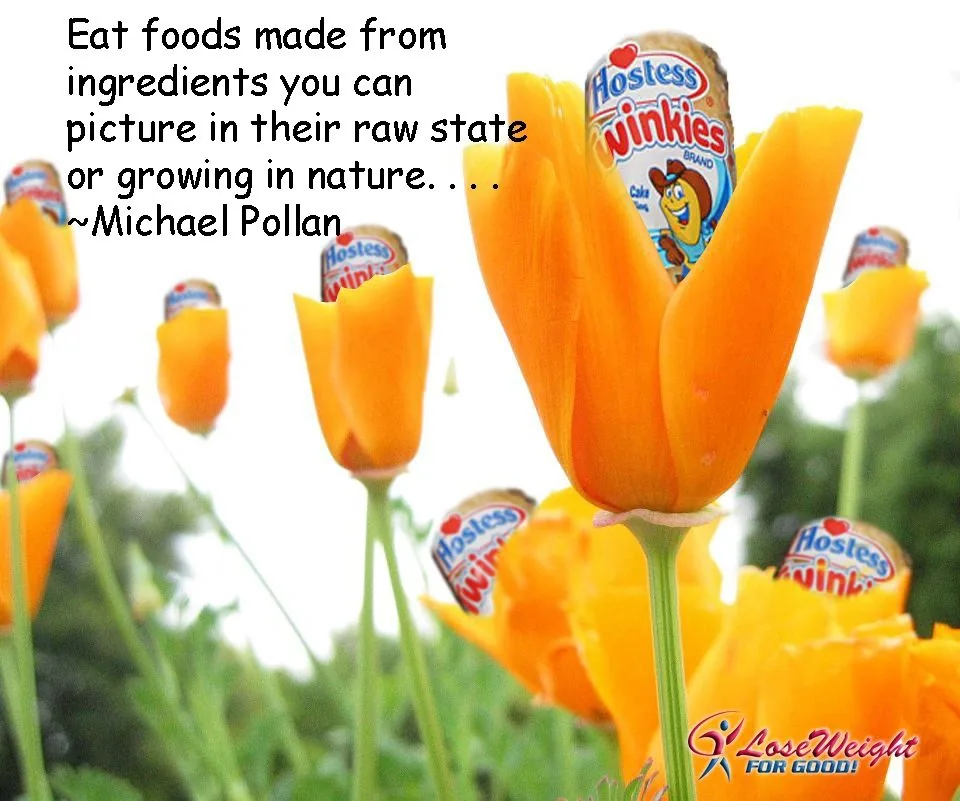
Eat food. Not too much. Mostly plants. (Michael Pollan)
That's it. That's the answer. Everything else is details, preferences, and optimization around the margins.
Will the food industry try to sell you something more complicated? Absolutely. Will researchers continue to publish studies on individual nutrients? Of course. Will new diet books promise revolutionary approaches? Without question.
But underneath all that noise, the signal remains clear and consistent: the longest-lived, healthiest populations on Earth eat predominantly whole plant foods, don't overeat, stay physically active, and eat in the context of strong social connections.
You don't need to become a vegan. You don't need to give up your grandmother's chicken soup or the occasional burger at a cookout. But if the bulk of your diet (the everyday, unremarkable meals that make up 80-90% of what you eat) comes from plants, and those plants are as close to their natural state as possible, you will almost certainly be healthier.
As I noted in "Food Without Fear," when Michael Pollan reduced years of nutritional research into that simple three-line haiku, he wasn't dumbing things down. He was cutting through the complexity to expose the truth (L'HommeDieu, 2008).
Why This Remains Hard to Hear
The straight answer is actually available. We just don't want to hear it because:
- It's not sexy. "Eat your vegetables" doesn't sell books or supplements.
- It requires actual change. Not a 30-day challenge, but a fundamental shift in how you relate to food.
- It challenges powerful industries. Meat, dairy, processed food: these are billion-dollar industries with significant lobbying power and marketing budgets.
- It conflicts with our habits and culture. The Standard American Diet is deeply embedded in our lifestyle, and change is uncomfortable.
- It seems too simple. We've been conditioned to believe that difficult problems require complicated solutions. Sometimes they don't.
But here's what I've learned after losing 200+ pounds and keeping it off for over two decades: The simplicity is the point, not the problem.
You don't need to count macros, track ketones, calculate your omega-6 to omega-3 ratio, or worry about whether your protein is complete. You need to eat food that was recently growing out of the ground or hanging from a tree. Food that your great-grandmother would recognize as food. Food that doesn't need a health claim on the package because it's inherently nutritious.
My Challenge to You
The next time you hear about a revolutionary new diet, a breakthrough supplement, or conflicting nutritional advice that leaves you confused, ask yourself:
- Who benefits from this being complicated?
- What are they selling?
- Does this align with what the longest-lived populations actually eat?
- Is this advice trying to outsmart millions of years of evolution and thousands of years of traditional diets?
Then, perhaps, take a breath and return to the simple truth: Eat food. Not too much. Mostly plants.
That's the straight answer. It always has been.
The hard part isn't finding the answer. The hard part is accepting it, and then doing the uncomfortable work of actually changing.
But if a 420-pound junk food addict can accidentally become a healthy vegan just by following the evidence and listening to his body, maybe (just maybe) you can too.
References
Buettner, D. (2008). The Blue Zones: Lessons for living longer from the people who've lived the longest. National Geographic Society.
Buettner, D., & Skemp, S. (2016). Blue Zones: Lessons from the world's longest lived. American Journal of Lifestyle Medicine, 10(5), 318-321.https://doi.org/10.1177/1559827616637066 (opens in a new tab)
Campbell, T. C., & Campbell, T. M. (2006). The China study: The most comprehensive study of nutrition ever conducted and the startling implications for diet, weight loss and long-term health. BenBella Books.
Esselstyn, C. B. (2007). Prevent and reverse heart disease: The revolutionary, scientifically proven, nutrition-based cure. Avery.
Estruch, R., Ros, E., Salas-Salvadó, J., Covas, M. I., Corella, D., Arós, F., ... & Martínez-González, M. A. (2013). Primary prevention of cardiovascular disease with a Mediterranean diet. New England Journal of Medicine, 368(14), 1279-1290.
Fraser, G. E. (2009). Vegetarian diets: What do we know of their effects on common chronic diseases? American Journal of Clinical Nutrition, 89(5), 1607S-1612S.
Ioannidis, J. P. (2018). The challenge of reforming nutritional epidemiologic research. JAMA, 320(10), 969-970.
Keys, A., Brožek, J., Henschel, A., Mickelsen, O., & Taylor, H. L. (1950). The biology of human starvation (Vols. 1-2). University of Minnesota Press.
L'HommeDieu, R. (2008). Food without fear: 3 things to remember. WLS Lifestyles Magazine (opens in a new tab), Summer 2008, 10-12.
L'HommeDieu, R. (2013). Lose weight for good! Re-train your brain and never diet again! Betterness Institute Press.
Loma Linda University Health. (2023). Loma Linda's longevity legacy. Retrieved fromhttps://news.llu.edu/research/loma-lindas-longevity-legacy (opens in a new tab)
Marketdata LLC. (2019). The U.S. weight loss & diet control market. Marketdata Enterprises.
Moss, M. (2013). Salt sugar fat: How the food giants hooked us. Random House.
Omenn, G. S., Goodman, G. E., Thornquist, M. D., Balmes, J., Cullen, M. R., Glass, A., ... & Hammar, S. (1996). Effects of a combination of beta carotene and vitamin A on lung cancer and cardiovascular disease. New England Journal of Medicine, 334(18), 1150-1155.
Ornish, D., Scherwitz, L. W., Billings, J. H., Brown, S. E., Gould, K. L., Merritt, T. A., ... & Brand, R. J. (1998). Intensive lifestyle changes for reversal of coronary heart disease. JAMA, 280(23), 2001-2007.
Pollan, M. (2008). In defense of food: An eater's manifesto. Penguin Press.
Rolls, B. J., & Barnett, R. A. (2000). Volumetrics: Feel full on fewer calories. HarperCollins.
Wansink, B. (2006). Mindless eating: Why we eat more than we think. Bantam Books.
Weil, A. (2000). Eating well for optimum health: The essential guide to bringing health and pleasure back to eating. Knopf.
Willcox, D. C., Willcox, B. J., Todoriki, H., & Suzuki, M. (2009). The Okinawan diet: Health implications of a low-calorie, nutrient-dense, antioxidant-rich dietary pattern low in glycemic load. Journal of the American College of Nutrition, 28(sup4), 500S-516S.
Willett, W. (2001). Eat, drink, and be healthy: The Harvard Medical School guide to healthy eating. Free Press.
Willett, W., Rockström, J., Loken, B., Springmann, M., Lang, T., Vermeulen, S., ... & Murray, C. J. (2019). Food in the Anthropocene: the EAT–Lancet Commission on healthy diets from sustainable food systems. The Lancet, 393(10170), 447-492.
Note: There has been a growing push for physical therapists (PTs) to address nutrition as part of holistic, evidence-based patient care. The American Physical Therapy Association (APTA) supports PTs in providing general nutrition education and screening, emphasizing that diet and lifestyle are essential to preventing and managing chronic conditions that commonly affect patients in rehabilitation. While individualized meal planning and medical nutrition therapy remain outside most PTs’ legal scope, therapists are encouraged to educate patients on healthy eating patterns, recognize signs of malnutrition, and collaborate with registered dietitians to optimize outcomes and overall wellness.
Originally published on C.O.R.E Framework.