Finding Flow - The Success Secret That Nobody Talks About
9 min read
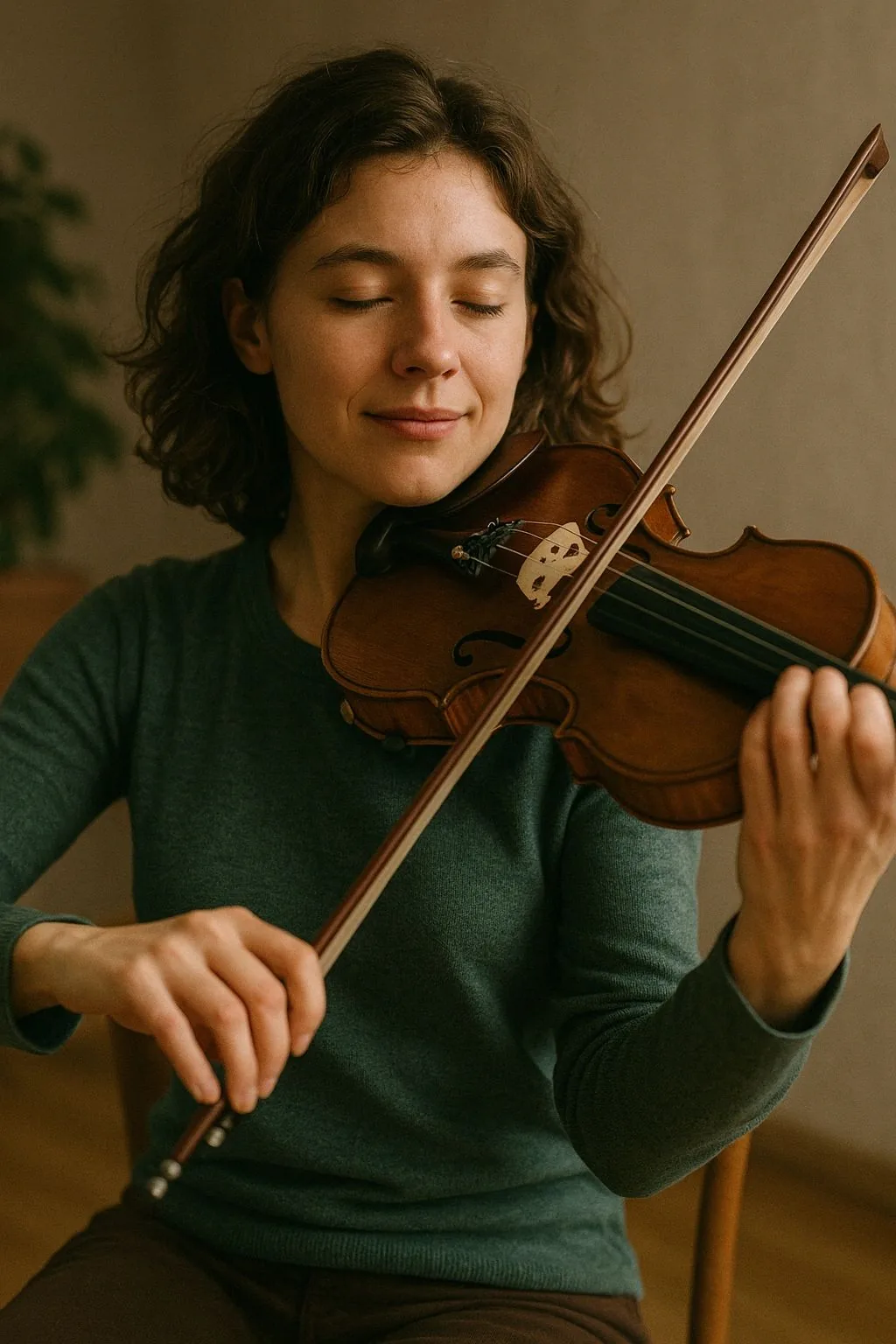
Have you ever been so absorbed in something that hours passed like minutes? Maybe you were coding, writing, playing music, having an incredible conversation, or even studying something that actually fascinated you. You looked up and suddenly it was 2 a.m., but you weren't tired. Actually, you were energized! Welcome to FLOW - (Not Flo from Progressive)
And according to psychologist Mihaly Csikszentmihalyi (pronounced "chick-sent-me-high"), those flow moments aren't just pleasant, they're the key to a meaningful, high-performing, genuinely satisfying life.
The Man Who Discovered Flow
Csikszentmihalyi's interest in flow started in graduate school when he would watch painters working in their studios. He was fascinated by their ability to forget everything (food, sleep, time) while they worked. Even stranger? When they finished a painting, they'd set it aside and immediately start another. They weren't interested in the finished product. They were after something else entirely: the experience of complete absorption in the act of creation.
This observation became one of the most important discoveries in psychology.
Csikszentmihalyi went on to interview thousands of people; athletes, artists, scientists, musicians, business executives, rock climbers, dancers, composers, and yes, even everyday people doing everyday tasks. He found that this quality he called "flow" was universal. Everyone, regardless of culture, age, or profession, could experience it.
What Exactly Is Flow?
Flow is a state of complete absorption in an activity. During flow, you experience:
- Deep enjoyment - Not just happiness, but a sense of being fully alive
- Total involvement - You're 100% present, not thinking about the past or future
- Loss of self-consciousness - That critical voice in your head goes quiet
- Distorted sense of time - Hours feel like minutes (or sometimes minutes feel like hours)
- Effortless action - You're performing at your peak, but it doesn't feel like work
- A sense of control - You feel capable and in command of what you're doing
Athletes call it "being in the zone." Artists call it "losing yourself in your work." Whatever you call it, it's one of the most satisfying states a human can experience.
The Eight Characteristics of Flow
Csikszentmihalyi identified eight specific elements that define the flow experience:
1. Complete Concentration on the Task
Your attention is fully absorbed. You're not checking your phone, thinking about lunch, or worrying about that thing you said in class yesterday. You're here, now, doing this.
2. Clear Goals and Immediate Feedback
You know exactly what you're trying to do, and you can tell moment-by-moment whether you're succeeding. When you're playing basketball, you know if the shot goes in. When you're coding, you know if the program runs. This clarity keeps you engaged.
3. Transformation of Time
Time either speeds up or slows down. You might work for four hours and feel like it's been 30 minutes, or you might experience a single moment with incredible depth and detail.
4. The Experience Is Intrinsically Rewarding
You're not doing it for a grade, for money, or for approval. The activity itself is its own reward. You'd do it even if no one was watching and you got nothing external from it.
5. Effortlessness and Ease
Even though you might be working hard, it doesn't feel like struggle. Your actions flow naturally, almost automatically. You're performing at a high level without the usual friction.
6. Balance Between Challenge and Skill
This is the crucial element. Flow happens in the sweet spot where what you're doing is challenging enough to stretch you, but not so hard that you're overwhelmed. You're at the edge of your abilities, but still capable.
7. Actions and Awareness Merge
You stop thinking about what you're doing. You just do it✔. There's no mental commentary, no second-guessing. The doer and the doing become one.
8. A Sense of Control Over the Task
You feel capable. You trust yourself. You're not anxious about failing because you're so absorbed in the process that outcomes fade into the background.
The Flow Channel: Finding Your Sweet Spot
Here's the key insight that makes flow practical: flow happens when challenge and skill are both high and matched.
Think of it like this:
- Low challenge + Low skill = Apathy (You're bored and don't care)
- Low challenge + High skill = Boredom (Too easy, you zone out)
- High challenge + Low skill = Anxiety (You're overwhelmed and stressed)
- High challenge + High skill = FLOW (You're engaged, energized, performing at your peak)
This is why scrolling social media doesn't produce flow. It requires minimal skill and minimal challenge. It's also why jumping into advanced physics when you barely understand basic math creates anxiety, not flow.
Flow lives in that sweet spot where you're stretched but not broken, challenged but capable.
Why Flow Matters in College
College is supposedly about learning, growing, and preparing for your future. But let's be honest; most of the time it feels like you're just surviving. Pulling all-nighters. Cramming for exams. Writing papers you don't care about. Checking boxes.
Flow offers a different path.
Here's what research shows about flow:
- People in flow learn faster and retain information better
- Flow experiences are more satisfying than almost any other state (including passive pleasure like watching TV or partying)
- Regular flow experiences are associated with higher wellbeing and life satisfaction
- Flow builds competence—you actually get better at things when you're in flow
- Flow is intrinsically motivating—it makes you want to keep going
In other words: Flow is what college should feel like, but often doesn't.
The good news? You can cultivate it.
How to Find Flow in College
1. Choose the Right Level of Challenge
Pay attention to when you're in that sweet spot between boredom and anxiety.
Too easy? Level up. Take a harder class. Add constraints to your assignments. Push yourself.
Too hard? Step back. Build foundational skills first. Break the challenge into smaller pieces.
Just right? You'll feel stretched but capable. This is where flow lives.
2. Eliminate Distractions
Flow requires complete concentration. You can't experience flow if you're context-switching between your essay, TikTok, texts, and a Netflix show running in the background.
Try this: When you want to enter flow, create a distraction-free environment. Turn off notifications. Put your phone in another room. Use website blockers if needed. Give yourself permission to focus on one thing for a sustained period.
3. Set Clear Goals with Immediate Feedback
Vague goals kill flow. "Study for the test" is vague. "Complete 20 practice problems and check my answers" is clear.
The clearer your goal and the more immediate the feedback, the easier it is to stay in flow. This is why video games are so good at producing flow—they give you crystal-clear objectives and instant feedback about whether you're succeeding.
Apply this principle to your work: Break tasks into concrete steps with checkpoints where you can assess your progress.
4. Do Things for Their Own Sake (Not Just for Grades)
Flow is driven by intrinsic motivation—doing something because you genuinely care about it, not because you'll get rewarded.
This is hard in college where everything is graded. But ask yourself: Is there any part of this assignment I actually find interesting? Can I approach it in a way that engages my curiosity?
Even better: Make time for activities that have nothing to do with grades. Play an instrument. Rock climb. Code for fun. Write poetry. Build something. These flow-producing activities will energize you for everything else.
5. Build Your Skills Progressively
Flow requires that your skill level matches the challenge. So if you want more flow, you need to keep developing your abilities.
The beautiful thing? Flow itself builds skill. When you're in flow, you're learning and improving. This creates a positive cycle: more skill enables more challenging flow experiences, which build more skill, which enables even higher levels of flow.
This is what mastery feels like—not the endpoint, but the ongoing process of challenging yourself at the edge of your abilities.
6. Find Your Flow Activities
Not all activities produce flow equally for everyone. Pay attention to what activities consistently pull you into that absorbed state.
Maybe it's:
- Writing
- Solving math problems
- Having deep conversations
- Playing sports
- Making art or music
- Debugging code
- Building or fixing things
- Teaching others
- Reading about topics you love
These activities are clues to where your natural talents and interests lie. They're also clues to what kind of work might be fulfilling for you long-term.
7. Schedule Blocks of Uninterrupted Time
Flow takes time to develop. You can't drop into flow in a 20-minute study session between classes. You need sustained, uninterrupted blocks.
Try scheduling 2-4 hour blocks where you can work on a single project without interruption. These longer sessions give you time to warm up, enter flow, and stay there long enough to make real progress.
Flow Is Not Always Easy to Find
Here's something important: flow isn't about avoiding all difficulty or frustration.
Sometimes you'll hit friction. Sometimes you'll struggle. Sometimes the first 30 minutes feel like slogging through mud before you break through into flow.
That's normal.
The key is distinguishing between:
- Productive struggle (you're challenged but making progress, and it feels meaningful)
- Unproductive suffering (you're stuck, the task is poorly designed, or you're missing prerequisite skills)
If you're experiencing the second kind, it's okay to step back and reassess. Maybe you need to build more foundational knowledge. Maybe the task needs to be restructured. Maybe it's just not the right fit.
But if you're experiencing productive struggle—the kind where you're stretched but engaged—stay with it. Flow often comes after you push through that initial resistance.
The Bigger Picture
Csikszentmihalyi's research led him to a profound conclusion: Happiness is an internal state of being, not a matter of external factors.
We think happiness comes from getting good grades, landing the perfect internship, being popular, or having the right lifestyle. But these external achievements don't reliably produce lasting satisfaction.
Flow does.
When you structure your life around activities that produce flow—when you regularly challenge yourself at the edge of your abilities in domains you care about—you build a genuinely satisfying life.
This is what it means to be engaged with your education, rather than just enduring it. This is what it means to grow and develop, rather than just accumulating credentials.
Your Flow Challenge
This week, try this:
- Identify one flow moment from your past. When have you experienced complete absorption? What were you doing? What conditions enabled it?
- Schedule one 2-hour flow session. Pick an activity that interests you, create the right conditions (appropriate challenge, clear goals, no distractions), and see what happens.
- Pay attention to the flow channel in your classes. Are you bored (too easy), anxious (too hard), or engaged (just right)? Adjust accordingly.
- Notice what activities consistently pull you into flow. These are breadcrumbs pointing toward your natural talents and potential sources of meaning.
The Bottom Line
College doesn't have to be a grind. It can be a series of flow experiences where you're fully engaged, constantly learning, and genuinely satisfied with how you're spending your time.
That's not naive optimism; it's based on decades of research on human performance and wellbeing.
The question isn't whether flow is possible. It's whether you're willing to structure your life in ways that make it more likely.
Start with one hour this week. Find something challenging but doable. Eliminate distractions. Set clear goals. See what happens.
You might discover that the secret to college success isn't grinding harder—it's finding more flow.
What's one activity that consistently pulls you into flow? Start there.
Originally published on C.O.R.E Framework.