Finite and Infinite Games (1986)
6 min read
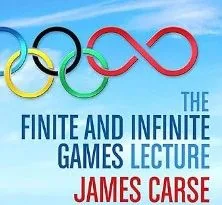
James Carse offers a deceptively simple distinction that becomes a lens for understanding everything from war to love, business to religion. There are two kinds of games: finite games, played to win, and infinite games, played to continue playing. This slim philosophical meditation, part aphorism, part manifesto, argues that most human suffering comes from treating infinite games as finite ones, from trying to "win" at life, relationships, or meaning itself.
Author Credentials/Background
James P. Carse (1932–2020) was Professor Emeritus of History and Literature of Religion at New York University, where he directed the Religious Studies Program for thirty years. He earned his Ph.D. from Yale and authored several books on religion and culture, including The Silence of God and The Religious Case Against Belief. Unlike academic philosophers who build systematic arguments, Carse wrote in an aphoristic, almost poetic style influenced by Zen Buddhism and existentialism. He was known as a captivating lecturer who challenged students to question their assumptions about competition, success, and meaning. The book has developed a cult following among entrepreneurs, game designers, and organizational theorists. Simon Sinek's The Infinite Game brought Carse's ideas to a mainstream business audience.
The Big Idea(s)
Finite vs. Infinite Games: Finite games have known players, fixed rules, agreed-upon objectives, and clear endpoints. Someone wins, the game ends. Infinite games have known and unknown players, changeable rules, and the objective is to perpetuate the game itself.
Titles vs. Openness: Finite players play within boundaries to acquire titles (winner, champion, expert). Infinite players play with boundaries, treating rules as agreements that can be changed rather than constraints that must be obeyed.
Theatrical vs. Dramatic: Finite players are theatrical. They perform roles scripted by society. Infinite players are dramatic. They are genuinely open to being changed by the encounter.
Power vs. Strength: Power is the ability to control others and derives from finite games. Strength is the ability to be changed, to remain open, to continue. Power ends games; strength continues them.
Society vs. Culture: Society is finite. It concerns boundaries, property, nations, winning. Culture is infinite. It concerns possibility, creativity, continuity. Society wants to be eternal (frozen in victory); culture wants to be continuing (always evolving).
Surprise: Finite players try to eliminate surprise to ensure victory. Infinite players play for surprise. They want to be astonished, transformed, made different by the encounter.
Who Needs This Book
Essential for: Anyone feeling trapped by zero-sum thinking, leaders trying to build lasting organizations, people questioning whether they're "winning" at a game they never chose to play
Highly valuable for: Educators, therapists, game designers, strategists, anyone interested in how framing affects human behavior and meaning
Useful for: Those who find philosophy too dry. Carse's aphoristic style reads more like poetry than argument.
If you've ever sensed that "winning" at something important left you feeling empty, or that our obsession with competition misses something fundamental about human flourishing, this book articulates what you've intuited.
Key Takeaways by Chapter
Chapter 1: There Are at Least Two Kinds of GamesThe foundational distinction. Finite games are played to win and end; infinite games are played to continue playing. We can play finite games within an infinite game, but we cannot play an infinite game within a finite game. The difference is not in the activity but in how we approach it.
Chapter 2: No One Can Play a Game AloneGames require willing participants. Finite players must conceal their strategies (surprise defeats opponents). Infinite players must reveal their strategies (surprise keeps the game alive). Finite play is theatrical, with performers acting scripted roles. Infinite play is dramatic, with participants genuinely changed.
Chapter 3: I Am the Genius of MyselfSociety trains us for finite games, to acquire titles, to prove ourselves. But we choose to be trained; no one becomes a finite player without consent. True freedom lies in recognizing we can always start something new. "Genius" is the capacity to source ourselves rather than be determined by past achievements.
Chapter 4: A Finite Game Occurs Within a World; An Infinite Game Creates WorldFinite games need boundaries, audiences, and endpoints. Infinite games generate new possibilities, new players, new ways of continuing. Property is the paradigmatic finite game, bounded, defended, contested. Culture is the paradigmatic infinite game, shared, evolving, ungovernable.
Chapter 5: Nature Is the Realm of the UnspeakableFinite games try to master nature, to make it speak our language. Infinite play listens to nature, recognizing it has its own voice. Science as finite game seeks to end mystery; science as infinite play celebrates that answers generate new questions.
Chapter 6: We Control Nature for Societal ReasonsMachine culture treats nature as resource to be controlled. Gardening culture tends possibilities without fixing outcomes. Finite players create machines; infinite players create gardens. The difference is whether we're trying to end change or continue it.
Chapter 7: Myth Provokes Explanation but Accepts None of ItStories can be finite (explanations that end inquiry) or infinite (myths that generate endless interpretation). Great myths aren't answers but invitations. Religion as finite game offers salvation (ending); religion as infinite game offers awakening (continuing).
Questions It Provokes
What games am I playing that I didn't consciously choose to enter?
Am I treating my career, my relationships, my life as finite or infinite games?
When I "win," why does it so often feel hollow?
What would it mean to play my work, my marriage, my parenting to continue rather than to win?
How much of my identity is built on titles and past victories rather than ongoing creative engagement?
What boundaries in my life am I treating as fixed that could actually be played with?
Is my organization trying to "win" its industry or trying to keep the game of value creation going?
Recommendation Strength
HIGHLY RECOMMENDED for anyone interested in how framing shapes experience and meaning. This is a rare book that can shift how you see everything, including competition, relationships, work, and mortality, through a single elegant distinction.
Caution: The book is intentionally compressed and aphoristic. It doesn't argue for its claims so much as assert them. Some readers find this profound; others find it frustrating. It's philosophy-as-poetry, not philosophy-as-proof. Read it slowly, one section at a time, and let the ideas percolate.
Also note: The business applications (Sinek's The Infinite Game) simplify and sometimes distort Carse's ideas. The original is more radical, more spiritual, and more unsettling than the corporate-friendly adaptations suggest.
Related Resources
The Structure of Scientific Revolutions (Kuhn, 1962): Similar insight that we operate within frameworks we don't question. Paradigms are like finite games we've forgotten are games.
Zen and the Art of Motorcycle Maintenance (Pirsig, 1974): Another philosophical meditation that uses a simple distinction (classical vs. romantic quality) to illuminate everything
The Infinite Game (Sinek, 2019): Popular business application of Carse's ideas. More accessible but less profound.
Flow (Csikszentmihalyi, 1990): Psychological research that supports the idea that playing for the experience rather than the outcome produces fulfillment
Tao Te Ching (Lao Tzu): The ancient philosophical source for many of Carse's ideas about power, strength, and not-forcing
Impact beyond philosophy: Carse's distinction has influenced game design (infinite games in video games), organizational theory (companies as infinite games), education (learning as infinite play), and therapy (helping clients recognize they're treating infinite situations as finite contests). The framework provides language for something many people sense but struggle to articulate: that our culture's obsession with winning may be causing us to lose at what matters most.
Originally published on C.O.R.E Framework.