
Reimaninging The Directionality Of How We Teach
17 min read
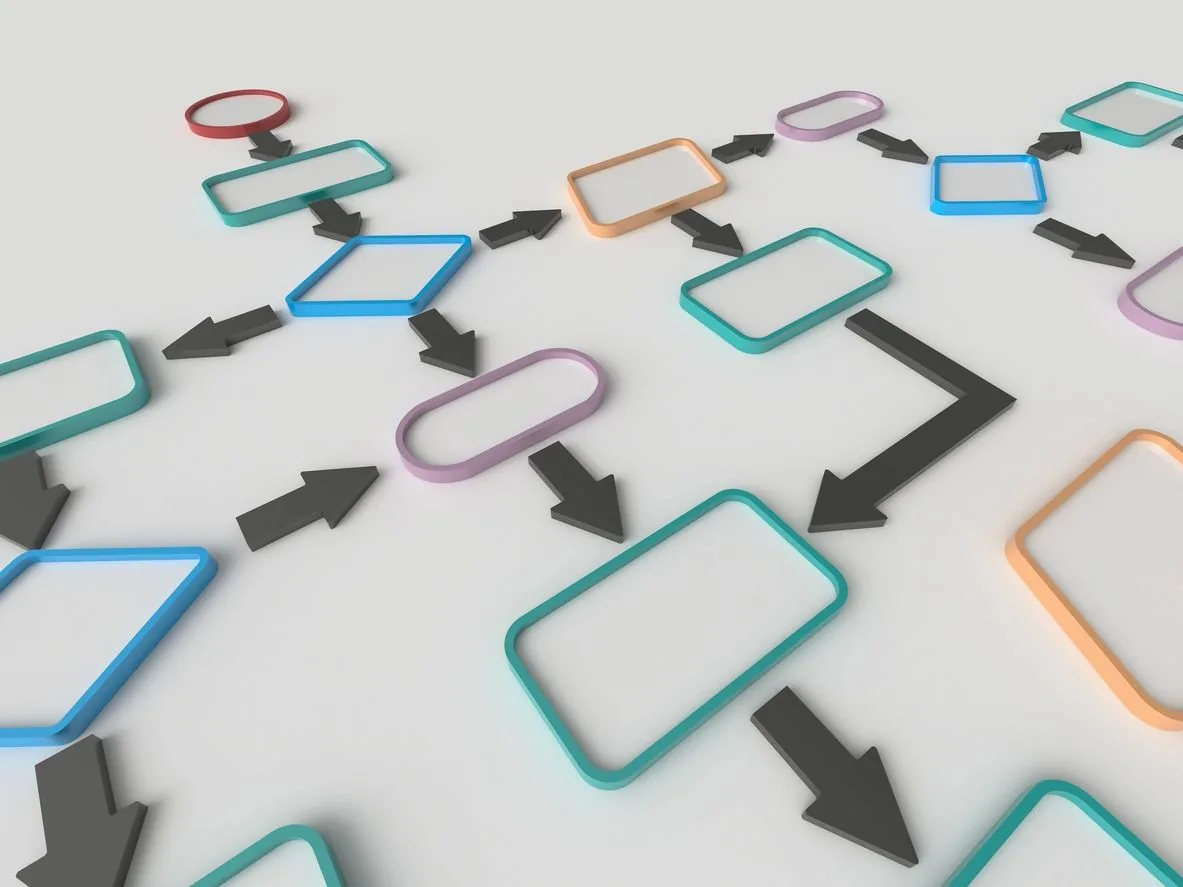
Effective feedback is not a discrete event. When designed well, it transforms assignments from isolated performances into an elegant learning system with iterative cycles where students develop increasingly sophisticated understanding.
Each comment becomes input. Each revision becomes output. Each exchange builds on the previous one, creating a feedback loop that is part of a system that deepens thinking, clarifies standards, and builds students' capacity for self-assessment that will last long after your course ends.
But systems can fail. And when feedback systems fail, they don't just fail neutrally. They actively damage learning. Poor feedback increases confusion rather than resolving it. It erodes trust between instructor and student. It signals to learners that their intellectual work doesn't matter enough for genuine attention. It trains students to see assignments as performances to be endured rather than opportunities for growth. Over time, bad feedback disengages learners from the very process that should be catalyzing their development.
The difference between feedback as transformative system and feedback as destructive force isn't subtle. It's visible in every interaction, every comment, every exchange between instructor and student. And once you see it, you can't unsee it.
In my own journey through online, graduate-level education, I have had instructors give the same feedback to every student. Word-for-word identical. Copy-pasted indiscriminately.
I have had instructors give feedback so generic it's useless: "Good work!" or "Needs improvement" with no specifics, nothing actionable, about what was good or what needs improving.
Recently, I had an instructor give feedback with just enough detail to reveal they hadn't actually reviewed my assignment. They referenced sections that didn't exist and praised points I never made. I'm not sure what happened.
A number representing a grade without meaningful feedback is of little value. It tells you where you landed but not how to get better. It's assessment without learning.
These aren't isolated incidents from one bad program. These are patterns that repeat across graduate education, especially in online environments where the distance between instructor and student becomes an excuse for minimal engagement. And here's what makes it worse: these same instructors genuinely believe they're providing feedback. They've checked the box. They've fulfilled the requirement. But they haven't taught anything.
I get it, as instructors, we are all stressed for time, and we all make mistakes. This is not a post intended to shame those of us who "just want to get this grading done before midnight." It's about gaining some insight into the impact of feedback and how it does (or does not) fit nicely into a pedagogical framework.
Understanding What's Actually Broken
The problem isn't that these instructors are lazy or uncaring (though some might be). The problem is that, in addition to being overworked and out of time, we sometimes forget the delicate system within which feedback sits and how the cogs and wheels of deep understanding actually work.
We talk about teaching modalities using surface-level labels (lecture, discussion, lab, seminar) as if these words capture something meaningful about how learning actually happens. They don't.
What if instead of categorizing teaching by its packaging, we understood it by its fundamental dynamics? What if the real differentiator isn't whether you're standing at a podium or sitting in a circle, but rather the directionality of information flow and interaction between minds?
Understanding directionality reveals why some assignments transform students while others simply measure them, why some feedback catalyzes growth while other feedback gets ignored, and why the same teaching method can succeed brilliantly in one context and fail miserably in another.
The Architecture of Learning: Directionality as Foundation
Think about information flow like water moving through a system.
In unidirectional teaching (traditional lectures, assigned readings, demonstrations, most video content), information flows one way: from instructor to learner. This isn't inherently bad. Unidirectional transmission is efficient for schema building, particularly for novice learners who need reduced cognitive load to process new frameworks (Sweller et al., 2019). The problem isn't the method itself but the assumption that transmission alone constitutes teaching.
The real transformation happens when we shift from unidirectional to bidirectional structures, where information and cognitive work flow in both directions. This is where feedback becomes learning rather than merely evaluation. This is at the heart of active learning.
But here's where it gets interesting: not all bidirectional learning is created equal. In fact, there are two fundamentally different forms of bidirectional interaction, each serving distinct purposes and drawing on different theoretical traditions.
Two Flavors of Dialogue: Cognitive and Coaching
Cognitive Dialogue is what most of us think of when we imagine rigorous academic interaction. It's the structured, goal-directed exchange aimed at deepening conceptual understanding or refining performance.
Picture a clinical supervisor working through differential diagnosis with a resident, carefully questioning their reasoning: "Why did you rule out lupus? What additional tests would help you distinguish between these two possibilities?" Or imagine a writing instructor challenging a student's argument structure: "Your evidence here supports X, but your claim asserts Y. How do we bridge that gap?"
This is dialogue in service of disciplinary reasoning, grounded in standards and evidence. It's cognitively demanding, focused on the work itself, and anchored in frameworks like Vygotsky's Zone of Proximal Development, cognitive apprenticeship (Collins et al., 1989), and Socratic inquiry. The instructor brings expertise about what good work looks like and uses questioning, modeling, and guided practice to help students internalize those standards. This looks a lot like case-based instruction.
Coaching Dialogue operates on an entirely different plane. It's exploratory rather than directive, learner-centered rather than content-centered.
This is where we support motivation, identity development, self-efficacy, goal setting, and emotional regulation. Drawing from coaching psychology (Grant, 2017), motivational interviewing (Miller & Rollnick, 2013), and humanistic approaches, Coaching Dialogue asks different questions: not "how can we improve this analysis?" but "what matters to you about this work?" or "what strengths did you discover in yourself through this challenge?" or "what's getting in the way of your progress right now?"
Coaching Dialogue acknowledges that learning isn't purely cognitive. Students carry doubts about belonging, questions about whether they're "cut out for this," struggles with motivation when the work gets hard. They're developing professional identities, not just skills. They need someone to believe in them while they're learning to believe in themselves. This is more like problem-based learning. We don't have a predetermined destination.
Where Cognitive Dialogue deepens knowledge, Coaching Dialogue deepens the learner.
Both are essential. Both are often missing.
The Third Dimension: Multidirectional Learning
Beyond bidirectional exchange lies multidirectional learning, where interaction becomes distributed among learners, instructors, and authentic task environments.
Group problem-based learning, team-based learning, simulations, collaborative projects: these modalities reflect experiential learning theory (Kolb, 2015) and situated cognition. The complexity increases, as does the authenticity. Knowledge isn't just transmitted or refined in dialogue; it's actively co-constructed through multiple intersecting perspectives and real-world constraints.
Think about medical students running a simulated code. They're not just receiving information from an instructor or engaging in one-on-one dialogue. They're coordinating with team members, responding to a "patient" whose condition changes, making decisions under time pressure, and learning from the entire constellation of interactions. The instructor might be present as a facilitator, but the learning emerges from the complex, multidirectional flow of information and action.
Multidirectional learning is powerful for developing professional competencies, but it's also cognitively demanding and requires careful scaffolding. You can't throw novices into complex multidirectional environments and expect learning to magically happen. They need foundational schemas (often built through unidirectional transmission) and practice with guided feedback (built through bidirectional dialogue) before they're ready for the full complexity.
Assignments: The Hidden Lever of Transformation
Here's where theory meets practice in a way that matters immediately. Every assignment you design sits somewhere along the directionality continuum, and that position determines whether it functions as mere assessment or becomes a genuine learning tool.
Unidirectional Assessment
This happens when you assign work, students submit it, you grade it, and that's the end. You've measured performance, but you haven't improved learning. The assignment was an endpoint, not a catalyst.
This is where the general feedback nightmare lives: technically, feedback was provided, but nothing flowed back. No exchange occurred. No learning happened beyond "I got my grade."
The structure itself prevents dialogue. There's no mechanism for response, revision, or continued engagement. The assignment functions purely as measurement, which has its place, particularly in summative assessment, but it's not teaching. Information flowed one way. The student did cognitive work, yes, but that work ended at submission. The instructor did evaluation work, but that work didn't create learning.
Emergent Bidirectional Interaction
Things begin to shift when you provide feedback and create space for students to respond, revise, or engage further. The assignment starts to serve learning, not just evaluation.
This might look like:
- Feedback with revision opportunities
- Comments that pose questions students must answer
- Draft-and-revision cycles
- Office hours where students discuss their work with you
- Reflective responses where students explain their thinking
The key is that information flows both ways. You're not just evaluating; you're engaging. The student isn't just submitting; they're learning through the exchange.
But emergence alone doesn't guarantee depth or consistency. The dialogue might happen, but it might be shallow, rushed, or inconsistent.
Full Cognitive Dialogue: The Transformation
Assignments cross a pedagogical threshold when they move into iterative cycles of feedback, revision, and re-engagement. This is where standards become internalized, performance improves through reasoning rather than trial and error, and learning becomes genuinely co-constructed.
The formula is: Feedback + Uptake + Iteration = Cognitive Dialogue
It's the written, asynchronous analog of cognitive apprenticeship. You're not just telling students what's wrong. You're engaging them in progressively deeper cycles of thinking about their work. You're making your expert thinking visible. You're asking questions that require them to reason, not just comply. You're creating conditions where they internalize disciplinary standards through guided practice, not passive reception.
This is the model:
- Student submits initial work
- You provide substantive feedback that includes questions, challenges, and guidance
- Student responds: explaining their thinking, asking clarifying questions, proposing revisions
- You engage with their response: answering questions, pushing thinking further, providing next-level guidance
- Student revises and resubmits
- You evaluate growth, provide additional feedback, sometimes continue the cycle
Each iteration builds on the previous one. The student isn't just fixing errors; they're developing increasingly sophisticated understanding of what good work looks like and why. You're not just correcting; you're teaching through the dialogue itself.
This transformation doesn't require elaborate technology or radical redesign. It requires intentional structure and, critically, excellent feedback.
Six Dimensions of High-Impact Feedback
Contemporary research reveals that effective feedback operates across six major dimensions, each grounded in empirical evidence and learning theory. Understanding these dimensions makes it painfully clear why "Good work!" and copy-pasted comments fail so completely. Using this six-dimensional scaffold as a yardstick, we can then begin to understand the potential impact of our feedback and make small changes in one or more dimensions to make it more impactful.
Dimension 1: Directionality
Feedback can flow from instructor to student (unidirectional), create genuine exchange through revision cycles (bidirectional), or incorporate peer and group perspectives (multidirectional).
The choice matters because it shapes who does the cognitive work and how meaning gets constructed. Unidirectional feedback says "here's what's wrong; fix it." Bidirectional feedback says "here's what I'm seeing; help me understand your thinking, and let's figure out together how to strengthen this."
Dimension 2: Frequency
Single-cycle feedback serves evaluation. Iterative feedback over multiple cycles serves mastery.
The difference between one round of comments and three rounds of progressively refined dialogue is often the difference between superficial compliance and deep understanding. The first round might address surface issues. The second round can push into deeper conceptual territory because the surface issues are resolved. The third round can focus on nuance, sophistication, and professional-level reasoning.
Each cycle builds on the previous one. Students develop not just better products but better thinking processes.
Dimension 3: Depth
This extends beyond simply providing more comments. The WISE feedback model (Yeager et al., 2014) demonstrates that effective feedback:
- Combines warmth and wisdom: making it clear you believe in the student's potential while maintaining rigorous standards
- Focuses on improvement rather than judgment: framing feedback as "here's how to get better" not "here's what's wrong with you"
- Explicitly references standards and expectations: making criteria transparent so students understand what good work looks like
- Encourages both effort and belonging: recognizing hard work while affirming that students belong in this intellectual community
Depth also means:
- Asking rigorous questions that push deeper thinking
- Providing detailed guidance, not just error marking
- Modeling expert reasoning: "When I see X, I think about Y because..."
- Explaining the why behind your comments
- Connecting specific feedback to larger learning goals
Shallow feedback says "needs more evidence." Deep feedback says "Your claim in paragraph 3 needs empirical support. What data from the Johnson study could strengthen this? Consider also whether there's contradictory evidence you should acknowledge and address."
Dimension 4: Dialogue Type
Is this feedback serving Cognitive Dialogue or Coaching Dialogue? Both are valuable, but they require different skills and different intentionality.
Cognitive Dialogue feedback:
- Clarifies standards: "In professional program evaluation, stakeholder analysis needs to address power dynamics, not just identify who's involved"
- Challenges reasoning: "Your logic moves from A to C, but you've skipped B. How do you justify that leap?"
- Analyzes errors: "This statistical test assumes normal distribution. Your data is clearly skewed. What does that mean for your interpretation?"
- Models disciplinary thinking: "Experienced evaluators would question this data collection method because..."
Coaching Dialogue feedback:
- Explores motivation: "What drew you to focus on this particular aspect of the problem?"
- Builds on strengths: "Your ability to synthesize complex sources is really developing. How can you apply that strength to the weaker sections?"
- Practices active listening: "It sounds like you're frustrated with the ambiguity in these definitions. That's actually a sophisticated recognition of a real problem in the field"
- Supports identity development: "This work shows you thinking like a practitioner, not just a student. That's an important transition"
- Supports original thinking and new ideas.
Many instructors collapse these types, providing neither effective cognitive guidance nor genuine coaching support. Or they provide only cognitive feedback, leaving students to navigate motivation and identity challenges alone.
Dimension 5: Timeliness
The research here is clear and consistent. Timely feedback:
- Preserves memory traces: Students remember what they were thinking, what they struggled with, what choices they made
- Prevents reinforcement of errors: Students don't practice mistakes between assignment submission and feedback receipt
- Promotes psychological safety: Students know they won't be left wondering about performance for weeks
- Facilitates revision cycles: Fast turnaround makes multiple cycles feasible within a term
- Enhances motivation: Momentum is maintained; students stay engaged with the work
Immediate or near-immediate feedback is critical for skill acquisition. If you're teaching students to write SQL queries or conduct literature searches or perform clinical assessments, feedback needs to come while the attempt is still fresh.
Delayed feedback can serve reflective assignments where distance creates perspective, but it must be strategically delayed, not accidentally late. There's a difference between "I'm giving you this feedback after two weeks so you can return to it with fresh eyes" and "Sorry, I'm behind on grading."
Dimension 6: Quality
This isn't a single variable but a constellation of design choices:
Alignment: Does feedback connect to stated learning objectives and address what you actually taught? Misaligned feedback confuses students and undermines trust.
Clarity: Is feedback interpretable? Students shouldn't need a decoder ring. Avoid jargon unless it's disciplinary language they should be learning. Be specific. "Unclear" is unclear feedback. "Your referent for 'this' in sentence 3 could be either the policy or the outcome. Which did you mean?" is clear.
Actionability: Does feedback specify concrete next steps? "This section needs work" is not actionable. "Reorganize this section to move from general to specific. Start with your overall finding, then present the three supporting pieces of evidence in order of strength" is actionable.
Cognitive appropriateness: Does feedback respect working memory limits? Twenty-seven comments on a three-page paper overwhelms students. They shut down. Better to identify the three most important issues and address those deeply.
Psychological safety: Does feedback uphold dignity while maintaining high expectations? There's a difference between "This analysis is superficial and shows you didn't understand the readings" and "This analysis would benefit from engaging more deeply with the complexity in the Johnson article, particularly her argument about X, which challenges your conclusion here."
Consistency: Are standards predictable over time? Students need to know what good work looks like. If your standards shift unpredictably (praising creativity in one assignment, then penalizing it in the next), students can't internalize criteria.
Quality feedback is hard. It requires expertise, attention, time, and care. It cannot be automated away or delegated to generic rubrics. It is, fundamentally, an act of teaching.
Why Most Feedback Fails: A Directionality Diagnosis
Now we can diagnose exactly what's wrong with the feedback failures I described at the beginning.
Copy-pasted identical feedback fails on every dimension:
- Directionality: Pretends to be bidirectional but is purely unidirectional transmission
- Frequency: Usually single-cycle with no opportunity for iteration
- Depth: Zero. It's not responsive to the actual work
- Dialogue type: Neither cognitive nor coaching. It's just procedural compliance
- Timeliness: Might be on time, but that's the only dimension it hits
- Quality: Completely lacks alignment, clarity, and actionability for any individual student
Generic praise or criticism ("Good work!" / "Needs improvement") fails on:
- Depth: Provides no guidance, models no thinking, asks no questions
- Quality: Not actionable. Students have no idea what to do next
- Both dialogue types: Neither develops knowledge nor supports the learner
Feedback on work that wasn't submitted fails on:
- Directionality: Reveals no actual exchange occurred. The instructor never engaged
- Quality: Completely misaligned with actual student work
- Every single dimension, because it's fraudulent
These failures aren't just bad practice. They're betrayals of the fundamental architecture of learning. They take something that should be bidirectional and reduce it to performance: the instructor performing the role of "feedback giver" without actually engaging in the cognitive and relational work that makes feedback educational.
From Diagnosis to Design
Understanding directionality changes everything about how we approach teaching.
It reveals why simply adding "discussion sections" doesn't guarantee better learning unless those discussions involve genuine bidirectional cognitive work. Students can talk in circles without anyone's thinking improving. The label "discussion" doesn't ensure productive dialogue.
It explains why students ignore feedback when it arrives too late (timeliness), lacks clarity (quality), or seems disconnected from what matters (alignment). The feedback might be delivered, but if the structure doesn't support uptake and iteration, learning doesn't happen.
It clarifies why some assignments feel transformative while others feel like busywork. Transformative assignments create conditions for genuine dialogue: multiple cycles, substantive feedback, student uptake, continued iteration. Busywork assignments are unidirectional: do this, submit it, get your grade, move on.
The framework isn't prescriptive. It doesn't mandate specific methods or declare one approach superior to all others. Instead, it provides a lens for understanding what's actually happening in your teaching and making intentional choices about what you want to happen.
Want to build foundational schemas efficiently? Unidirectional transmission works. Design clear lectures, select good readings, create effective demonstrations. Just don't pretend that transmission alone is sufficient for deep learning.
Need to develop clinical reasoning, writing ability, or complex problem-solving? Design for iterative Cognitive Dialogue. Create assignments that allow revision. Provide substantive feedback that models expert thinking. Ask questions that push deeper. Give students multiple opportunities to engage with your feedback and improve.
Supporting students through identity transitions or motivation challenges? Create space for Coaching Dialogue. Ask about their goals, their struggles, their discoveries about themselves as learners. Recognize effort and growth. Build self-efficacy and belonging alongside skill development.
Building professional competencies in authentic contexts? Structure multidirectional learning experiences. Use simulations, team projects, authentic problems. But scaffold carefully: make sure students have the foundational knowledge and guided practice they need before throwing them into complexity.
The Clarity That Changes Everything
Once you understand directionality, you can't unsee it.
You notice when assignments function as genuine dialogue or mere assessment. You recognize when feedback serves evaluation rather than learning. You see opportunities to transform unidirectional moments into bidirectional exchanges. You understand why certain teaching methods work in some contexts and fail in others.
And that awareness (that ability to see the architecture underneath the teaching) makes all the difference.
When I receive copy-pasted feedback now, I understand exactly what's broken: the directionality is performative rather than genuine. When I see "Good work!" with no substance, I recognize the absence of depth and actionability. When feedback references work I didn't submit, I see an instructor who never engaged in dialogue at all.
But more importantly, I understand how to build something better.
The architecture of learning isn't mysterious. Information flows in directions. Dialogue takes forms. Feedback operates across dimensions. Understanding these fundamentals doesn't make teaching easy. It's still cognitively demanding, time-intensive work that requires expertise and care.
But it makes teaching intentional. It makes our choices visible. It shows us what we're actually doing and whether it matches what we intend.
And it reveals the most important truth of all: feedback isn't something you give to students. It's a dialogue you build with them.
The question isn't whether your feedback is positive or negative, long or short, handwritten or typed. The question is whether the structure you've created supports genuine dialogue, the kind where information flows both ways, where students uptake and iterate, where learning happens through the exchange itself.
That's the architecture that transforms education from transmission to genuine understanding.
This framework integrates research from dialogic pedagogy (Alexander, 2008), cognitive apprenticeship (Collins et al., 1989), feedback literacy (Carless & Boud, 2018), coaching psychology (Grant, 2017), cognitive load theory (Sweller et al., 2019), and the WISE feedback model (Yeager et al., 2014).
Originally published on C.O.R.E Framework.