
Sapiens: Insights on Teaching and Leadership in Higher Education
4 min read
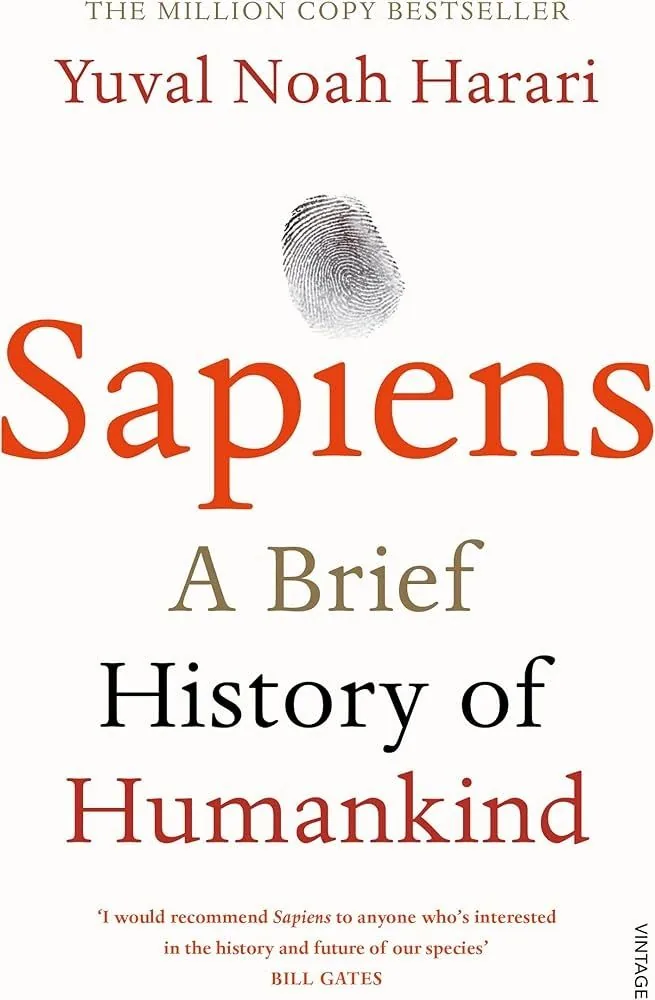
Yuval Noah Harari’s Sapiens: A Brief History of Humankind offers more than just a history lesson. The book’s deep dive into the evolution of humanity provides a lens through which educators and academic leaders can reimagine their approach to teaching and leadership. Harari’s insights on the Cognitive, Agricultural, Unification, and Scientific Revolutions offer valuable lessons for faculty members teaching in higher education and academic leaders managing faculty teams.
The Cognitive Revolution: The Power of Shared Narratives
In Sapiens, Harari highlights how early humans developed the ability to create and share abstract concepts, myths, and stories. These shared narratives allowed for massive cooperation and helped bind communities together. For educators, this emphasizes the importance of creating a shared vision within the classroom. Students are more likely to engage deeply when they understand the broader narrative behind their learning journey. Faculty members who can frame their course content within compelling stories or societal relevance can foster greater interest and long-term retention.
This lesson is equally powerful for leadership in academia. Leaders must ensure that their teams of faculty share a common understanding of institutional goals and values. Whether it’s the department's mission or the larger vision of the university, these shared narratives help align faculty efforts, enabling collaboration and collective growth. Academic leaders should focus on crafting clear, shared narratives that inspire unity and commitment among team members.
The Agricultural Revolution: Rethinking Traditional Structures
Harari challenges the notion that the Agricultural Revolution was an unequivocal leap forward. While it allowed humans to settle and produce more food, it also introduced greater inequality, hard labor, and a more rigid social hierarchy. Similarly, in education, traditional teaching structures—such as one-way lectures and rigid grading systems—might no longer serve the needs of modern students.
Educators should be willing to rethink these traditional methods and experiment with more active, student-centered learning approaches, such as project-based learning, flipped classrooms, and peer collaboration. This mirrors Harari’s call to reconsider progress. It reminds us that just because a system has been in place for a long time doesn’t mean it’s still the best approach.
For academic leaders, this lesson speaks to institutional structures that may inhibit innovation. Leadership must challenge existing academic hierarchies and bureaucratic systems that stifle creativity and collaboration. Leaders should empower their faculty to experiment, collaborate across disciplines, and find new ways to engage students in today’s rapidly changing educational landscape.
The Unification of Humankind: Leveraging Diversity for Cooperation
Harari discusses how humans unified through shared myths—like religion, money, and empire. These myths allowed large groups of people to cooperate effectively. For educators, this highlights diversity and inclusion's role in fostering a unified classroom environment. Recognizing and celebrating diverse perspectives can enrich the learning experience for all students. By acknowledging each student's unique contributions to the classroom, educators create an inclusive environment where cooperation thrives.
This lesson underscores the importance of building diverse teams for academic leadership. Leaders who foster inclusive environments where faculty members from different backgrounds and disciplines feel valued and heard can create stronger, more innovative teams. In the same way that shared myths unified early human societies, shared goals and values within diverse academic teams can drive collaboration and academic success.
The Scientific Revolution: The Pursuit of Knowledge and Innovation
Harari argues that the Scientific Revolution introduced the belief in progress and the systematic pursuit of knowledge. Educators in higher education are at the forefront of this pursuit, guiding students to develop critical thinking skills and a thirst for discovery. The lesson here for educators is the importance of instilling a mindset of curiosity and exploration. Faculty should encourage students to challenge assumptions, ask bold questions, and embrace intellectual risk-taking.
For academic leaders, the Scientific Revolution reminds them that innovation should be a constant pursuit. Academic leadership must support research and teaching that pushes the boundaries of knowledge. This requires fostering a culture where faculty are encouraged to innovate in both their teaching and scholarship, with institutional support for interdisciplinary collaboration and novel pedagogical approaches.
The Future of Homo Sapiens: Preparing for Change
In the final chapters of Sapiens, Harari speculates about the future of humanity, especially in light of emerging technologies like artificial intelligence and biotechnology. For educators, this is a call to prepare students for an unpredictable future. The skills students will need are less about rote memorization and more about adaptability, critical thinking, and emotional intelligence. Educators must focus on preparing students to thrive in a world where change is the only constant.
For leaders in academia, this reinforces the need to prepare their institutions for the future of education. From embracing online learning technologies to developing programs that prepare students for careers in emerging fields, leaders must anticipate and adapt to future trends. The best leaders will not only manage today’s challenges but also have a vision for how to navigate tomorrow’s complexities.
Conclusion: Applying Sapiens to Higher Education
While Sapiens offers a fascinating history of humankind, it also holds invaluable lessons for educators and academic leaders. Faculty members can use Harari’s insights to create more engaging, inclusive, and forward-thinking learning environments. Meanwhile, academic leaders can apply these lessons to build stronger, more innovative teams that are prepared for the future of education.
Just as Homo sapiens’ success depended on their ability to adapt and evolve, so too must educators and leaders in academia embrace the challenges of the modern world, fostering environments that promote growth, collaboration, and lifelong learning.
Originally published on C.O.R.E Framework.