Teaching Through Story: Unraveling the Mystery
12 min read
I have a confession to make. I watch a lot of detective shows. Law & Order, CSI, any British mystery series I can get my hands on. And somewhere between season 3 of a police procedural and preparing to teach Advanced Clinical Decision Making, something clicked.
The way detectives solve crimes is exactly how we teach differential diagnosis.
Think about it. A detective arrives at a crime scene. They interview witnesses (patient history). They gather evidence (clinical tests). They develop a list of suspects (differential diagnosis). They systematically rule people out based on alibis (special tests that eliminate certain pathologies). Sometimes it's one perpetrator. Sometimes it's a conspiracy of multiple factors working together.
The more I sat with this parallel, the more excited I became. What if I stopped teaching clinical reasoning like a dry, systematic process and started teaching it like we were solving crimes?
While I have introduced the "concept" to my students. I have never blown out a full theatrical production. Maybe that needs to change.
The Birth of "Clinical Columbos: The Case Files"
That's when "Clinical Columbos: The Case Files" was born. (Named after the famous detective TV character, though I'm dating myself with that reference.)
The concept is simple but powerful: treat every patient case like a crime that needs solving. Students become clinical detectives. The complaint is their 911 call. The body is the crime scene. And their job is to systematically investigate until they've identified the guilty pathology.
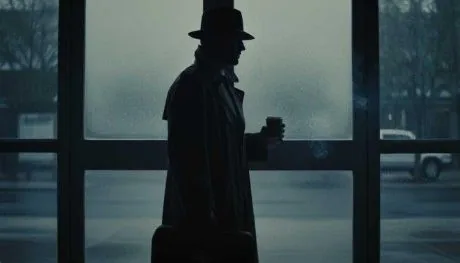
But here's where it gets fun. Instead of just telling students to think like detectives, I wanted to immerse them in that world. So I created a film noir introduction, complete with dramatic narration, jazz music, and metaphorical trench coats.
You can read the full script at the bottom of the post
Why This Works: The CORE Framework in Action
This isn't just theatrical flair for its own sake. (Though I won't lie, the theatrical elements are genuinely fun.) This approach aligns perfectly with what we know about effective learning.
It's Engaging. Students don't just passively receive information about clinical reasoning. They're drawn into a narrative. They become characters in a story. The detective metaphor creates curiosity and investment.
It's Relevant. The detective process mirrors the actual clinical reasoning process exactly. Students aren't learning an artificial framework they'll need to "translate" later. They're learning a mental model that will serve them in every patient encounter.
It's Organized. The five "Rules of Engagement" provide clear structure: Document everything. Justify your moves. Eliminate systematically. Consider the conspiracy. Stay humble. These rules organize the messy process of clinical reasoning into manageable principles.
It's Concise. Rather than overwhelming students with abstract theories about hypothetico-deductive reasoning, the detective metaphor provides one clear, memorable framework that contains all the essential elements.
Active Learning Through Investigation
What makes this particularly powerful is how it transforms passive learning into active investigation.
In traditional lectures, we might present a case and walk students through the reasoning: "Given these symptoms, we'd consider these three diagnoses. Based on this test result, we eliminate option A. Therefore..."
With the Clinical Columbos approach, students do the investigating. They receive "case files" (in actual manila folders if you want maximum impact). They build suspect boards. They gather evidence. They establish alibis. They argue their cases with peers.
This aligns beautifully with what Scientific Teaching tells us about active learning. When students are actively engaged in the process rather than passively observing it, learning gains increase significantly. The research shows 9-16% higher learning outcomes with interactive formats compared to traditional lectures.
The Power of Metaphor in Learning
There's something deeper happening here too. Educational research consistently shows that metaphors aren't just decorative language. They're cognitive tools that help us understand complex, abstract concepts by mapping them onto more familiar, concrete experiences.
Most students have watched detective shows. They intuitively understand how investigations work. By mapping clinical reasoning onto this familiar framework, we're giving students a mental scaffold they can use to organize new learning.
When a student is stuck during a patient encounter six months from now, they won't think, "What's the formal hypothetico-deductive process again?" They'll think, "What would a detective do next? What evidence am I missing? Which suspects haven't I ruled out yet?"
Building the Experience
I'm planning to go all in on this the next chance that I get. Here's what I'm envisioning:
- The session opens with the film noir introduction (lights dimmed, jazz playing softly)
- Students receive physical case files in manila folders labeled "CONFIDENTIAL"
- Each student gets a laminated "Clinical Detective Badge" they can keep
- They receive a card with "The Detective's Code" (the five rules)
- We might even have cheap magnifying glasses as props (fun, memorable, under $2 each)
The goal isn't just to teach clinical reasoning. It's to create an experience that students remember, talk about, and most importantly, internalize.
The "It Depends" Wisdom
As I wrote in my recent essay about behaviorism and constructivism, effective teaching requires knowing which approach fits which learning objective.
For foundational skills (anatomy, basic assessment procedures), more structured, systematic approaches work well. But for higher-order clinical reasoning? That requires heuristic thinking. Problem-solving. Creativity. The ability to navigate ambiguity.
The Clinical Columbos approach creates space for that kind of thinking. Yes, there's structure (the five rules provide that). But within that structure, students have autonomy to investigate, develop theories, argue perspectives, and construct understanding.
Why I'm Excited (and Nervous)
Here's the honest truth: I've never done anything quite like this before. I've taught clinical reasoning many times. I've used case studies extensively. But I've never committed this fully to an immersive, narrative-driven approach.
Part of me wonders: Will students take it seriously? Will the theatrical elements feel gimmicky? Will the metaphor actually enhance learning or just distract from it?
But another part of me knows: This is exactly the kind of teaching moment that students remember. Not because it's flashy, but because it transforms something abstract (clinical reasoning) into something concrete (detective work). Not because it's entertaining, but because the entertainment serves the learning.
And honestly? I'm excited to try something new. Teaching should be an act of continuous experimentation. We should bring the same curiosity and rigor to our pedagogy that we bring to our research.
The Invitation
If you teach clinical reasoning (or any kind of complex problem-solving), I invite you to consider: What metaphors might unlock understanding for your students? What narrative frameworks could make abstract processes concrete?
I am interested to see where this goes, because the best teaching, like the best detective work, requires careful observation of evidence and willingness to revise theories when the data demands it.
For now, I'm grabbing my metaphorical trench coat and my very real case files.
The game is afoot.
Oh, by the way, you don't need a detective theme. Maybe for you it's:
- Scientific investigation for medical diagnosis
- Puzzle-solving for mathematical problem-solving
- Archaeological excavation for historical analysis
- Recipe development for chemical processes
The specific story matters less than the principle: find a familiar framework that maps onto the unfamiliar skill you're teaching. Then commit to it fully. Create an experience, not just an explanation.
Below is the script I have been working on as an introduction to this concept.
"Clinical Columbos: The Case Files"
A Film Noir Introduction -
[Opening Scene - To be read in dramatic noir style, dimmed lights, jazz music optional]
The rain hammered against the windows of the hospital like it had a personal grudge. It was 8:47 on a Tuesday morning, and the coffee was already cold. That's when they walked in.
You see, in this city . . . this medical city we call clinical practice. . . everybody's got a story. And most of them? They're lying.
Not on purpose, mind you. But pain has a way of clouding memory. Time distorts the details. And the human body? Well, it's the most unreliable witness you'll ever meet. It sends false signals, hides evidence, and sometimes... sometimes it's running a conspiracy so complex it would make the mob look like amateurs.
My name? Doesn't matter. What matters is this: I'm a doctor of physical therapy. But today, you might as well call me what I really am. . . a detective.
[Narrator continues, pacing slowly]
In my line of work, you learn fast: every patient is a mystery. They come through that door with a complaint: shoulder pain, can't walk right, back's been killing them for weeks. That's your 911 call. That's your crime scene.
But here's the thing about crime scenes: what you see first is never the whole story.
That shoulder pain? Could be a rotator cuff that's been slowly tearing itself apart. Could be a nerve that's been choked out three vertebrae north. Could be a heart that's trying to tell you something before it's too late. Or hell, could be all three working together like they planned this job months ago.
You've got suspects. Dozens of them. And your job. . . our job . . . is to figure out which ones did it.
[Pause. Let it sink in.]
Some of you are thinking: "But we're not detectives. We're healthcare providers. Scientists. Clinicians."
Sure. Tell yourself that if it helps you sleep at night.
But walk with me for a minute. Think about what a detective does:
They arrive at a scene. They gather evidence. They interview witnesses. . . and they know those witnesses might not be telling the whole truth, even when they think they are. They develop suspects. They test theories. They look for the clues that don't fit. They establish alibis. They rule out the innocent and close in on the guilty.
Sound familiar?
That's clinical reasoning, friend. That's differential diagnosis. That's every single patient encounter you'll ever have.
[The Challenge]
Here's your problem: The body doesn't come with a confession. It won't tell you straight out what's wrong. Sometimes it points you in twelve different directions at once. Sometimes it hides the evidence so deep you'll need special imaging just to find the crime scene.
And time? Time's your enemy. Because while you're standing there trying to figure out if it's a meniscal tear or a ligament strain or a bone bruise, that patient is counting on you. They've got a life to get back to. A job. Kids. A marathon they've been training for. They need answers.
But here's the beautiful thing about being a clinical detective: You've got tools. You've got techniques. You've got a system.
You've got the questions that separate the suspects from the innocents. You've got the tests that establish alibis—the ones that say "couldn't have been that, boss, the evidence doesn't fit." You've got pattern recognition that comes from seeing the same crimes play out in different bodies, different times, different ways.
[The Setup]
So here's how this is going down today.
You're going to work cases. Real cases. Real patients with real problems who need real answers.
You're going to build suspect boards. . . we call them differential diagnoses in the daylight, but between you and me, it's a suspect board. You're going to list every possible perpetrator.
Then you're going to investigate. You're going to ask the right questions. Order the right tests. Gather the right evidence. And piece by piece, you're going to establish alibis. You're going to clear the innocent and close in on the guilty.
Some cases? Open and shut. Classic presentations. The usual suspects doing their usual damage.
But some cases? Those are the tough ones. Multiple perpetrators. Conflicting evidence. Witnesses who can't remember if the pain started two weeks ago or two months ago. Tests that point in different directions like they're deliberately trying to confuse you.
Those are the cases that separate the rookies from the veterans.
[The Rules of Engagement]
Now, in this precinct, we've got rules:
Rule One: Document everything. Build your case file. Write down your suspects. Record your evidence. Track your reasoning. Because when you're three suspects deep and the patient just told you something that changes everything, you need to know where you've been.
Rule Two: Justify your moves. You want to order an MRI? Tell me why. You want to do a Lachman test? Explain what you're looking for. Random fishing expeditions waste time and money. Every question you ask, every test you run—it should move you closer to the truth.
Rule Three: Eliminate systematically. Don't just pile up suspects. Cross them off. Give them alibis. "This can't be a rotator cuff tear because the strength is normal and there's no painful arc." That's an alibi. Write it down. Move on.
Rule Four: Consider the conspiracy. Sometimes it's not one thing. Sometimes three different pathologies are working together, and you've got to untangle all of them. Don't lock onto your first suspect and ignore the others lurking in the shadows.
Rule Five: Stay humble. The best detectives know they don't know everything. They're willing to say "I need more information." They're willing to consult with the specialists. They're willing to admit when they're wrong. Pride closes cases incorrectly. Humility solves them.
[The Payoff]
You do this right. . . you think like a detective, you investigate systematically, you follow the evidence where it leads. . . and you know what happens?
You solve the case.
That patient who walked in at 8:47 on a rainy Tuesday? They walk out with answers. With a plan. With hope that somebody actually figured out what's been plaguing them.
And you? You get to do it all over again tomorrow. Different patient. Different mystery. Different suspects.
Because in this city. . . this medical city we call clinical practice. . . the cases never stop coming.
But you'll be ready.
You're not just DPTs anymore.
You're clinical detectives.
[Final Beat - Delivery Options]
So grab your metaphorical trench coat and your actual clipboard.
The game is afoot. The patients are waiting.
And remember: in the end, it's not about how smart you look. It's not about memorizing every pathology in the textbook. It's not about being right on the first guess.
It's about the process. The investigation. The systematic search for truth in the face of complexity and uncertainty.
It's about thinking clearly when the evidence is murky.
It's about asking the right questions when you don't know the answers.
It's about being the kind of detective. . . the kind of clinician. . . who doesn't give up until the case is solved.
Now.
Let's go solve some crimes.
[Lights up. Jazz music swells. Hand out the first case files.]
Delivery Suggestions
Option A - Full Theatrical
- Instructor delivers this live in character
- Dim the lights
- Play period-appropriate jazz (Dave Brubeck, Miles Davis)
- Instructor wears a fedora and trench coat (optional but memorable)
- Hand out manila folders labeled "CASE FILE - CONFIDENTIAL"
Option B - Video Production
- Record this as a black-and-white video
- Add film noir visual effects (rain on windows, venetian blind shadows)
- Play before the intensive begins
- Increases production value, can be reused
Option C - Audio Recording
- Professional or dramatic reading recorded
- Students listen with case files in hand
- Less setup than video, still impactful
Option D - Hybrid
- Opening paragraph live, rest as handout
- Students read along in their "Detective Manual"
- Allows for personal delivery without full memorization
Supporting Materials to Hand Out:
- Case files in manila folders
- "Clinical Detective Badge" (laminated, students can keep)
- "The Detective's Code" (the five rules on a card)
- Small prop magnifying glass (cheap, fun, memorable)
Originally published on C.O.R.E Framework.