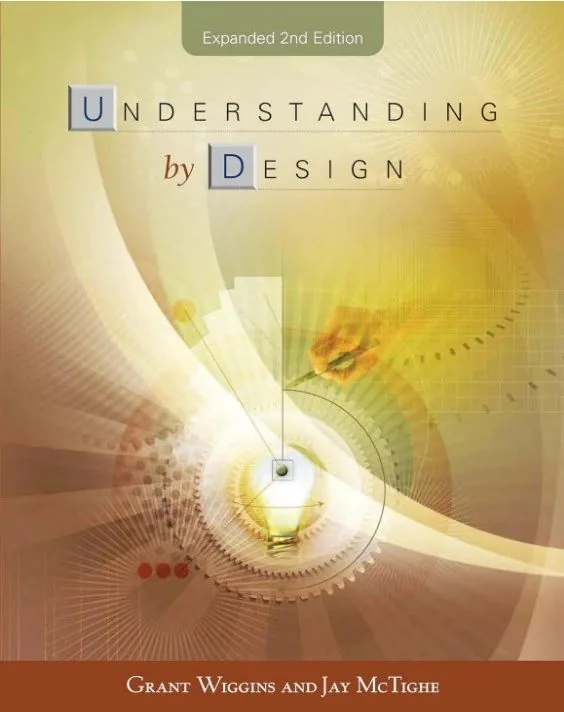
Understanding by Design (2nd Expanded Edition)
4 min read
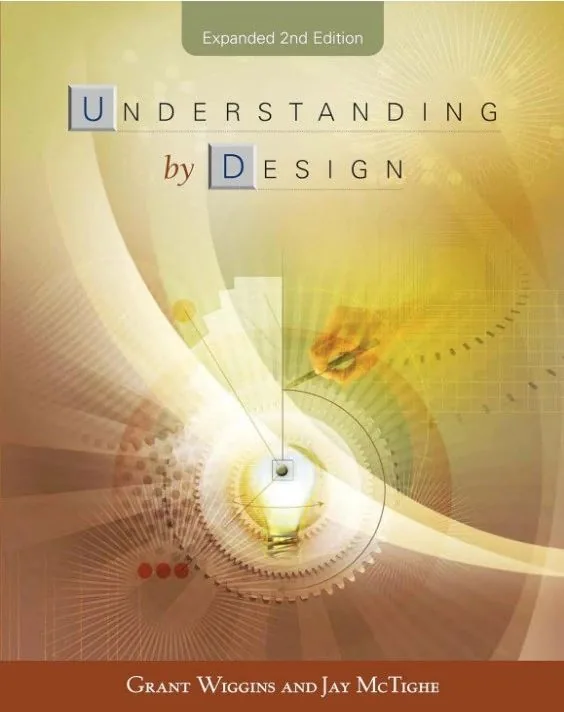
UbD answers a deceptively simple question: How do you design curriculum that actually leads to understanding rather than just coverage? The book presents "backward design": starting with desired results, then determining evidence of understanding, and finally planning instruction. This reverses the typical approach of starting with activities and textbooks.
The Big Idea(s)
- Backward Design: Start with the end in mind. Define what understanding looks like before planning activities.
- Six Facets of Understanding: True understanding means students can (1) explain, (2) interpret, (3) apply, (4) shift perspective, (5) empathize, and (6) self-assess.
- Essential Questions: Frame curriculum around provocative questions that drive inquiry rather than just covering content.
- Transfer: Understanding is proven when students can apply learning to new, authentic contexts, not just recall information.
Author Credentials/Background
Grant Wiggins (Ed.D., Harvard) was a nationally recognized assessment expert and founder of Authentic Education who worked on major reform initiatives including Vermont's portfolio system. Jay McTighe directed Maryland's Assessment Consortium and has 40+ years in education as teacher, state education department leader, and consultant across 48 states and 41 countries. Together, they created one of the most influential curriculum design frameworks in modern education.
Who Needs This Book
- Essential for: Instructional designers, curriculum coordinators, department chairs, anyone designing courses or programs
- Highly valuable for: Classroom teachers K-16 who want more purposeful lesson planning
- Useful for: Administrators evaluating curriculum quality, professional development leaders
If you've ever felt like you're "covering" material without students really "getting it," this book is for you.
Key Takeaways by Chapter
Chapter 1-2: Understanding Understanding: Understanding differs from knowledge. Students may know facts but not understand how to use them. The six facets provide concrete indicators of genuine understanding.
Chapter 3: Backward Design: The three-stage process: (1) Identify desired results, (2) Determine acceptable evidence, (3) Plan learning experiences. Most teachers work in reverse order, leading to "activity-oriented" rather than "results-oriented" design.
Chapter 4-5: Essential Questions & Understandings: Not all questions are essential. Essential questions are provocative, recurring, and frame meaningful inquiry. "Big ideas" should be stated as full-sentence generalizations, not just topics.
Chapter 6-7: Crafting Understandings: The UbD template provides concrete structure for unit design. Authors show how to identify what's worth being "familiar with" vs. what requires deep understanding.
Chapter 8-10: Assessment Evidence: Assessment should reveal understanding through authentic performance tasks, not just selected-response tests. The GRASPS framework (Goal, Role, Audience, Situation, Product, Standards) helps design authentic assessments.
Chapter 11-13: Learning Activities & Teaching: Instruction should be purposeful. The "WHERE TO" elements (Where, Hook, Explore, Rethink, Evaluate, Tailor, Organize) guide effective teaching. Activities must connect clearly to desired understandings.
Chapter 14-15: Implementation: Practical guidance on building UbD units, reviewing designs with peers, and implementing at school/district level. Includes quality control standards for self-assessment.
Questions It Provokes
- Am I teaching for coverage or for understanding? What's the difference in my practice?
- What do I really want students to understand and be able to do five years from now?
- How much of my curriculum is "important to know" vs. "enduring understanding"?
- Are my assessments actually measuring understanding or just recall?
- What would happen if I started every unit with the essential questions instead of the content outline?
- How can I balance backward design with mandated curriculum and pacing guides?
Recommendation Strength
ESSENTIAL for anyone involved in curriculum or instructional design. This is foundational work that has fundamentally shifted how educators think about planning.
Highly Recommended for classroom teachers, though implementation requires time investment and often works best with administrative support and collaborative planning time.
The framework is theoretically sound, practically applicable, and has stood the test of time (first edition 1998, still widely used today). While it requires rethinking traditional planning approaches, the payoff in student engagement and genuine understanding is worth the effort.
Related Resources
- Schooling by Design (Wiggins & McTighe): Applies UbD principles at the school/district level
- The Understanding by Design Guide to Creating High-Quality Units (McTighe & Wiggins): Practical workbook companion
- Bloom's Taxonomy: UbD builds on and extends Bloom's work on cognitive complexity
- Tyler's Basic Principles of Curriculum and Instruction: The original "objectives-first" approach that influenced backward design
- Hattie's Visible Learning: Complements UbD with research on what teaching practices actually impact learning
Comparison: While many instructional design models exist (ADDIE, Dick & Carey, Kemp), UbD stands out for its focus on understanding as the goal and its practical usability.
Originally published on C.O.R.E Framework.