Unlocking the Power of Curiosity
4 min read
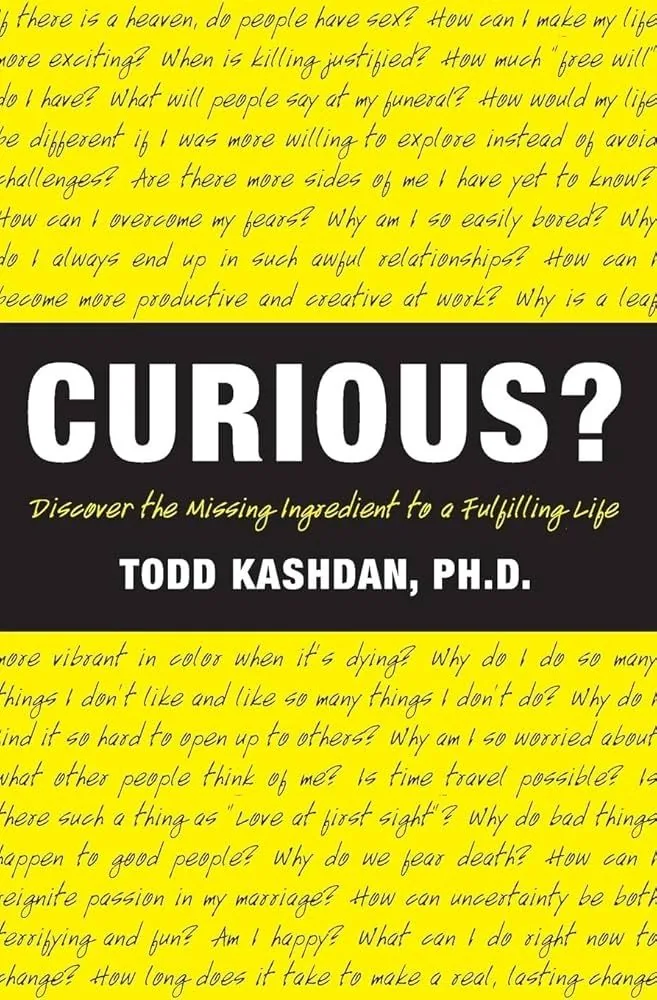
In Curious?: Discover the Missing Ingredient to a Fulfilling Life*,* author Todd Kashdan explores the often overlooked but immensely powerful role that curiosity plays in leading a meaningful and fulfilling life. Kashdan argues that curiosity is not just a fleeting interest but a vital skill that can be cultivated to enhance our personal and professional lives. By embracing curiosity, we can open ourselves to new experiences, foster deeper relationships, and ultimately, lead a more fulfilling life.
Main Takeaways from Curious?
Curiosity is a Pathway to Personal Growth: Kashdan emphasizes that curiosity drives personal development by pushing us to explore new ideas, challenge our assumptions, and seek out new experiences. It is through curiosity that we discover our passions, develop new skills, and gain a deeper understanding of ourselves and the world around us.
The Power of Embracing Uncertainty: One of the key themes in the book is the idea that curiosity thrives in uncertainty. Kashdan argues that by embracing uncertainty and being open to the unknown, we allow ourselves to grow and learn in ways that we might not have anticipated. This willingness to explore without needing immediate answers is crucial for personal and intellectual growth.
Curiosity Enhances Relationships: Curiosity is not only beneficial for personal growth but also for building and sustaining meaningful relationships. By being genuinely curious about others—asking questions, listening actively, and showing interest in their perspectives—we can deepen our connections and foster more authentic relationships.
Curiosity as a Tool for Overcoming Anxiety: Kashdan also discusses how curiosity can be a powerful tool for managing anxiety. When we approach situations with curiosity rather than fear, we are more likely to view challenges as opportunities for learning rather than threats. This shift in perspective can reduce anxiety and help us navigate difficult situations more effectively.
Cultivating Curiosity as a Lifelong Practice: Finally, Kashdan underscores that curiosity is not a fixed trait but a skill that can be developed and nurtured over time. By actively seeking out new experiences, asking questions, and staying open to the unknown, we can cultivate a mindset of curiosity that enriches our lives in countless ways.
How to Uncover and Cultivate Curiosity in Students Within the CORE Framework
The CORE framework—Concise, Organized, Relevant, and Engaging—offers a powerful approach to fostering curiosity in students. By integrating curiosity into each element of the CORE framework, educators can create a learning environment that encourages students to explore, question, and engage deeply with the material.
Concise: Spark Curiosity with Clear, Focused Content: When presenting information concisely, educators can highlight the most intriguing and thought-provoking aspects of a topic. By framing lessons around open-ended questions or presenting surprising facts, educators can pique students' interest and encourage them to explore further. For example, instead of simply stating a historical fact, an educator might ask, "What if this event had never happened? How would the world be different today?"
Organized: Structure Content to Encourage Exploration: Organizing content in a way that allows students to make connections between ideas can stimulate curiosity. Use a modular approach where students can explore topics in depth, moving from foundational concepts to more complex ones. Visual aids like mind maps can help students see how different ideas are interconnected, prompting them to ask questions and seek out additional information.
Relevant: Connect Learning to Real-World Applications: To cultivate curiosity, it’s essential to make learning relevant to students' lives. Show students how the material applies to the real world and their own experiences. Relating lessons to current events, personal interests, or future careers can motivate students to learn more and see the value in what they are studying. For instance, a science teacher might connect a lesson on ecosystems to local environmental issues, prompting students to ask how they can make a difference.
Engaging: Create an Interactive and Dynamic Learning Environment: Engagement is key to fostering curiosity. Use interactive activities, group discussions, and hands-on projects to make learning dynamic and participatory. Encourage students to ask questions, experiment, and explore topics from multiple perspectives. Gamification, where students earn rewards for exploring new ideas or solving complex problems, can also make learning more engaging and fun.
Curious?: Discover the Missing Ingredient to a Fulfilling Life by Todd Kashdan offers a powerful message about the importance of curiosity in leading a meaningful life. By understanding and cultivating curiosity, we can open ourselves to new experiences, foster deeper relationships, and approach challenges with a positive mindset. For educators, the CORE framework provides an effective tool for integrating curiosity into the learning process, creating an environment where students are motivated to explore, question, and engage deeply with the material. By fostering curiosity in students, we not only enhance their learning experience but also equip them with the skills and mindset needed to thrive in an ever-changing world.
Originally published on C.O.R.E Framework.