The Art of Exceptional Mentorship
5 min read
The Art of Exceptional Mentorship: Facilitating Flow, Balance, and Purpose
An exceptional mentor understands that true fulfillment arises when individuals engage in meaningful work that balances challenge and skill, fostering deep engagement and intrinsic motivation (Csikszentmihalyi, 1990). Rather than dictating a mentee’s path, great mentors facilitate environments that support autonomy, mastery, and purpose (Pink, 2009), ensuring that individuals have the freedom to direct their own growth, the opportunity to improve their skills, and a sense of contribution to something meaningful. This approach aligns with self-determination theory, which emphasizes the psychological need for autonomy, competence, and relatedness (Deci & Ryan, 2000), all of which are essential for sustained motivation and well-being.
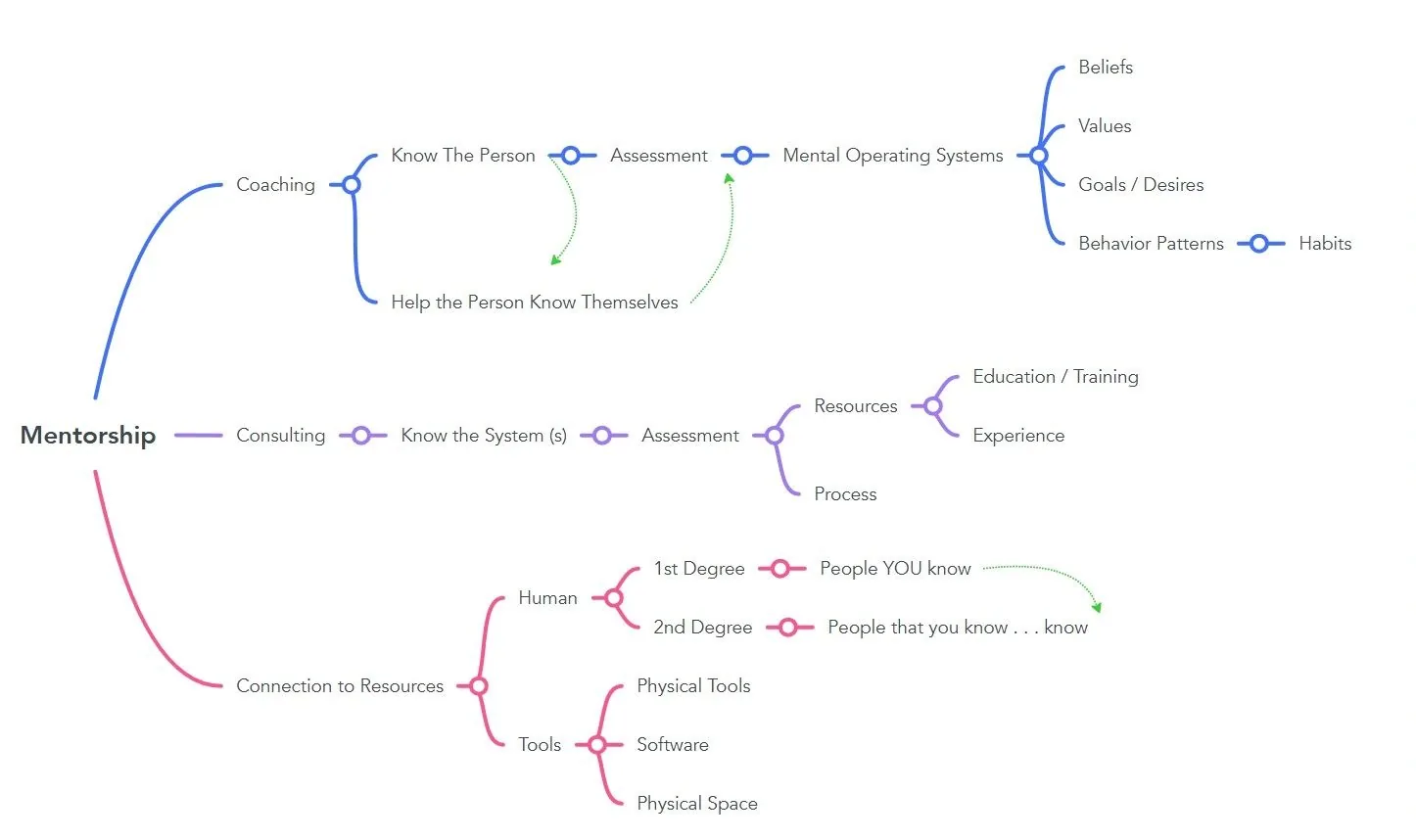
The mentorship framework reflects these principles by integrating coaching, consulting, and resource connection, recognizing that a mentee’s success depends not only on personal insight and skill development but also on navigating larger systems and leveraging available tools and networks. Great mentors do not impose solutions; instead, they assess an individual’s mental operating system, help them understand their habits and values, and connect them to the right people, physical resources, and learning opportunities that will enable them to thrive. By focusing on this holistic approach—helping mentees know themselves, understand their environment, and access critical resources—mentors create conditions where individuals can achieve life balance and meaningful progress in both their personal and professional pursuits.
Coaching: Knowing the Person & Helping Them Know Themselves
At the core of mentorship is understanding the individual, not just in terms of their skills but also their beliefs, values, goals, and behavioral patterns. Exceptional mentors don’t simply provide answers, they ask the right questions to help mentees uncover what truly drives them.
Key Coaching Strategies:
- Assessing Mental Operating Systems: Everyone has ingrained thought patterns that shape their decision-making and motivation. By guiding mentees in exploring their beliefs, values, and goals, mentors help them refine their purpose.
- Identifying Habits and Behavior Patterns: Self-awareness is key to growth. Recognizing automatic behaviors and how they impact performance allows mentees to make intentional improvements.
- Encouraging Self-Discovery: The goal isn’t to give mentees a rigid roadmap, it’s to equip them with the tools to navigate their own path with confidence and adaptability.
💡 Actionable Question: “When do you feel most engaged and energized in your work? How can we create more opportunities for that?”
Consulting: Understanding the System & Helping Mentees Navigate It
While coaching focuses on the individual, consulting is about helping mentees understand and navigate the larger systems they operate within. Whether it's an organization, an academic setting, or an industry, exceptional mentors guide their mentees in leveraging the system rather than being constrained by it.
Key Consulting Strategies:
- Teaching System Awareness: Understanding how structures function allows mentees to make informed decisions and avoid unnecessary frustration.
- Providing Training & Education: Learning how to navigate the system effectively, whether through formal education, mentorship, or experiential learning—empowers mentees to gain clarity and make progress.
- Developing Processes for Success: Rather than providing one-time solutions, great mentors help mentees build repeatable systems that promote long-term growth and efficiency.
💡 Actionable Question: “What part of the system do you find most difficult to navigate? How can we strategize to make it work for you?”
Connecting to Resources: Expanding the Mentee’s Support Network
Success is not a solo journey. Exceptional mentors understand that opportunities arise through connections, tools, and resources that extend beyond an individual’s immediate reach.
Key Resource Strategies:
- Leveraging Personal & Extended Networks: Mentees often lack the connections that can open doors for them.
- 1st-Degree Connections: Who do you know that could provide guidance, collaboration, or opportunities?
- 2nd-Degree Connections: Who do they know that could offer valuable insight or mentorship?
- Providing Access to Physical & Digital Tools: Whether it’s industry-leading software, training programs, books or workspace access, mentors should equip mentees with the tools they need to grow.
💡 Actionable Question: “Who in my network would be the best resource for this mentee’s challenge, and how can I facilitate that connection?”
The Exceptional Mentor’s Mindset
An exceptional mentor isn’t just a teacher, consultant, or coach—they are a guide, connector, and facilitator of fulfillment. They recognize that sustainable success comes from helping mentees cultivate an environment where they can experience flow, autonomy, mastery, and purpose.
To mentor effectively:
✅ Listen First, Guide Second: Mentees often have the answers within them,they just need the right questions.
✅ Empower, Don’t Dictate: Give mentees the tools and confidence to find their own solutions.
✅ Be a Connector: Your greatest impact may not be what you know, but who you introduce them to.
✅ Encourage Reflection & Action: Mentorship isn’t just about insight, it’s about transformation.
By integrating coaching, consulting, and resource connection, mentors don’t just help individuals succeed, they help them build self-sustaining pathways to fulfillment.
🔥 Final Challenge: Think about a mentee you’ve worked with—did you help them find their flow? Are they experiencing autonomy, mastery, and purpose? What’s one step you can take today to deepen their growth?
References
- Csikszentmihalyi, M. (1990). Flow: The psychology of optimal experience. Harper & Row.
- Deci, E. L., & Ryan, R. M. (2000). The "what" and "why" of goal pursuits: Human needs and the self-determination of behavior. Psychological Inquiry, 11(4), 227–268.
- Dweck, C. (2006). Mindset: The new psychology of success. Random House.
- Newport, C. (2016). Deep work: Rules for focused success in a distracted world. Grand Central Publishing.
- Pink, D. H. (2009). Drive: The surprising truth about what motivates us. Riverhead Books.
Originally published on C.O.R.E Framework.