The Infinite Game
4 min read
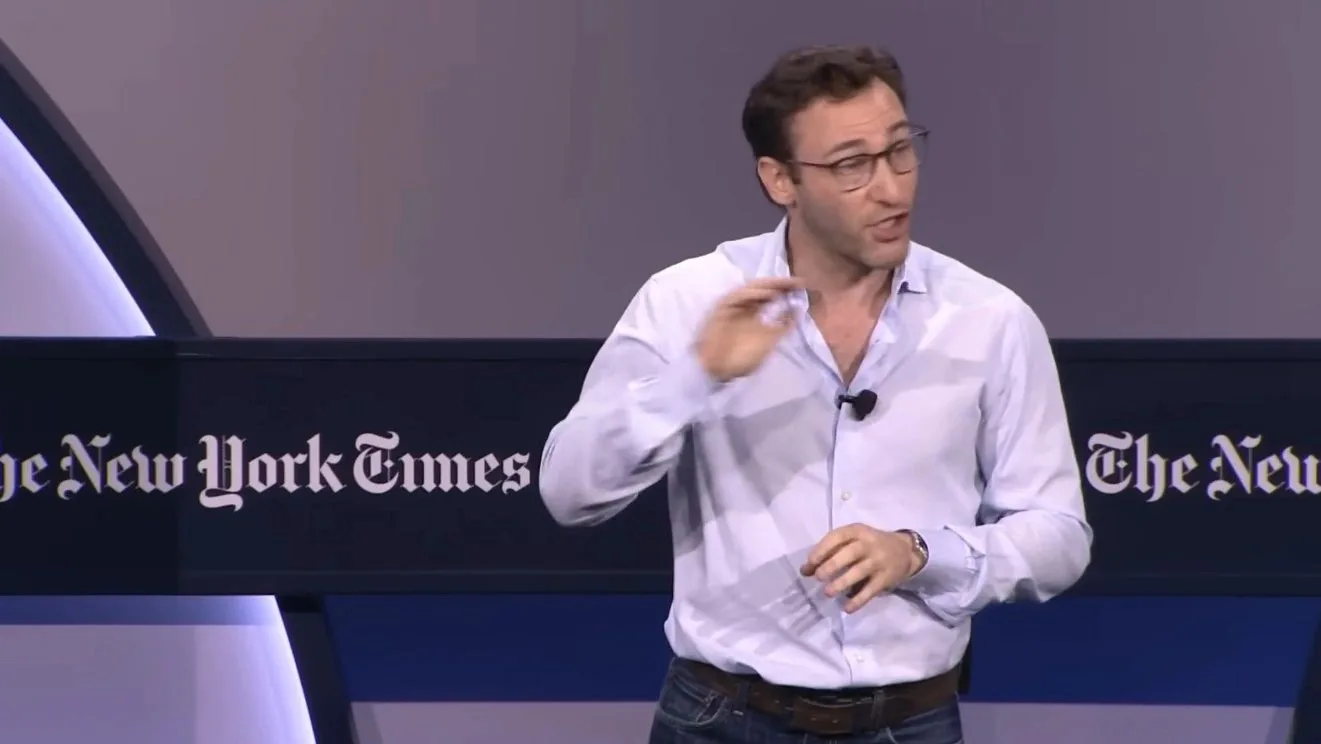
Presented: May 2018, New York Times Events
Presenter: Simon Sinek
Author Bio
Simon Sinek is a bestselling author and leadership theorist known for his work on organizational culture and purpose-driven leadership. His previous book Start With Why introduced the concept of the "Golden Circle" and became foundational reading in business and education circles. He is a frequent speaker on topics of leadership, motivation, and organizational behavior.
Big Ideas
Finite vs. Infinite Games. Sinek draws on game theory to distinguish between two fundamentally different approaches to competition. Finite games have known players, fixed rules, and agreed-upon objectives: someone wins, the game ends. Infinite games have changing players, fluid rules, and no final victory; the goal is simply to stay in the game. Business, politics, and education are infinite games, yet many organizations mistakenly play them as if they were finite, obsessing over rankings, quarterly metrics, and "beating" competitors.
The Danger of Mismatched Players. When a finite player competes against an infinite player, the finite player inevitably exhausts resources and will. Sinek uses the Vietnam War as his central illustration: the United States won most battles and inflicted far greater casualties, yet lost the war because they were playing to win while the North Vietnamese were playing to survive. This mismatch explains why organizations focused on short-term victories often find themselves in strategic "quagmire."
The Five Requirements for Playing the Infinite Game:
- A Just Cause — A vision of a future that doesn't yet exist, compelling enough that people will sacrifice to advance it. This isn't a mission statement about what you do; it's a declaration of what you're building toward.
- Courageous Leadership — Leaders willing to sacrifice short-term gains to protect long-term purpose. They say no to "dirty money" and make decisions through the lens of their cause rather than convenience.
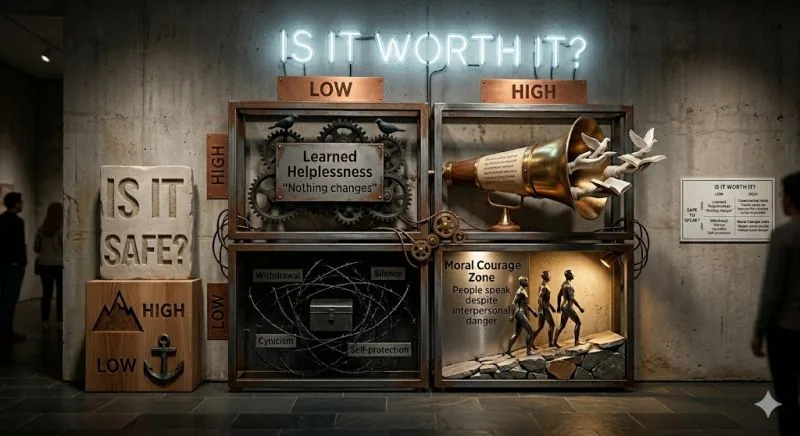
- Trusting Teams — Environments where people feel safe admitting mistakes, asking for help, and expressing vulnerability without fear of humiliation or punishment. Without this, organizations get people who "show up every day lying, hiding, and faking."
- A Worthy Rival — Competitors viewed not as enemies to defeat but as mirrors that reveal your own weaknesses, pushing you to improve.
- A Flexible Playbook — (Not elaborated due to time constraints, but implied as the willingness to adapt strategies while maintaining purpose.)
Rank Is Not Leadership. People at the top of organizational charts often have authority without leadership; people at lower levels often lead without formal power. True leadership is "the acceptance of the awesome responsibility to create an environment in which people can work at their natural best."
The Culture Problem. Sinek argues that when employees fear getting in trouble more than they fear doing the wrong thing, organizational culture has failed. He contrasts United Airlines (where employees feared using judgment) with Southwest Airlines (where employees feel trusted). The difference isn't hiring; it's environment.
Implications for Educators
Clarify Your Just Cause. "Providing education" is table stakes. Every institution does that. The harder question is: What future are you building? What would compel talented people to turn down higher salaries elsewhere to join you? Faculty and administrators should be able to articulate this clearly.
Resist the Metrics Trap. Rankings, starting salaries, and grant totals are finite-game thinking applied to an infinite endeavor. Sinek warns that advertising starting salaries "attracts people who want bigger bonuses rather than idealists and ideologues who are going to commit time and energy to impact the world."
Teach What Students Need, Not Only What They Want. Sinek draws a parallel to media: "We used to give people the news they needed whether they wanted it or not. Now we give people the news they want whether they need it or not." He suggests universities are drifting the same direction and urges teaching skills like effective confrontation, communication, and relationship-building, competencies that address rising anxiety, depression, and isolation.
Build Trusting Teams. Create environments where faculty and staff can admit uncertainty, ask for training, and raise concerns without career consequences. Excessive bureaucracy and "CYA culture" signal that people are spending energy protecting themselves rather than advancing the institution's purpose.
Model Courageous Leadership. Administrators who sacrifice people to protect their own interests destroy trust. Those who sacrifice their own interests to protect their people build loyalty that outlasts any strategic plan.
Think in Generations, Not Semesters. The goal isn't to be number one this year; it's to build an institution that will outlast everyone currently in it. Short-term pressures around grants and fundraising can distort hiring, curriculum, and culture in ways that undermine long-term health.
Originally published on C.O.R.E Framework.